In this article:
- How can I protect my dog in case of emergency during the holidays?
- Can holiday decorations be dangerous to dogs?
- How can I keep my dog safe around holiday gifts?
- Are Christmas trees and other holiday plants dangerous to dogs?
- How can I keep my dog safe around holiday foods?
- How can I protect my dog when I have guests over for the holidays?
- How can I keep my dog safe during holiday travel?
This article was originally published in December 2023, and has been updated.
Ask anyone: The holidays are warm and cheery, but they can also be stressful. That goes for humans and dogs. Seasonal celebrations disrupt routines, unfamiliar houseguests arrive, and travel by plane, train, or car can provoke anxiety. In addition to these perceived threats, festive decor can be hazardous to our sweet pooches, who simply don’t know any better than to chew on new, interesting things.
Understanding what’s truly dangerous, setting house rules for guests, and knowing how to hide enticing gifts from nosy dogs will help you and your best friend safely enjoy your celebrations. Here’s what you need to know to make sure your dogs stay merry and bright all season long.
How can I protect my dog in case of emergency during the holidays?
Make sure you have the phone number and address of your closest 24-hour emergency veterinary clinic. If you’re traveling for the holidays, find the closest one to wherever you’re staying. And confirm working hours for the clinic or your vet’s office ahead of time—they may have an adjusted holiday schedule.
Keep your local animal poison control number handy, or call ASPCA Poison Control (888-426-4435, $95 fee) or the Pet Poison Helpline (855-764-7661, $89 fee) if your dog eats something they shouldn’t have.
Ensure that your dog’s microchip and tags are up to date so you can track them if they get loose.
You’re better off safe than sorry, so it’s best to prepare by taking the steps above. But, of course, we’d all rather prevent medical and other emergencies—and the following tips can be a big help on that front.

Can holiday decorations be dangerous to dogs?
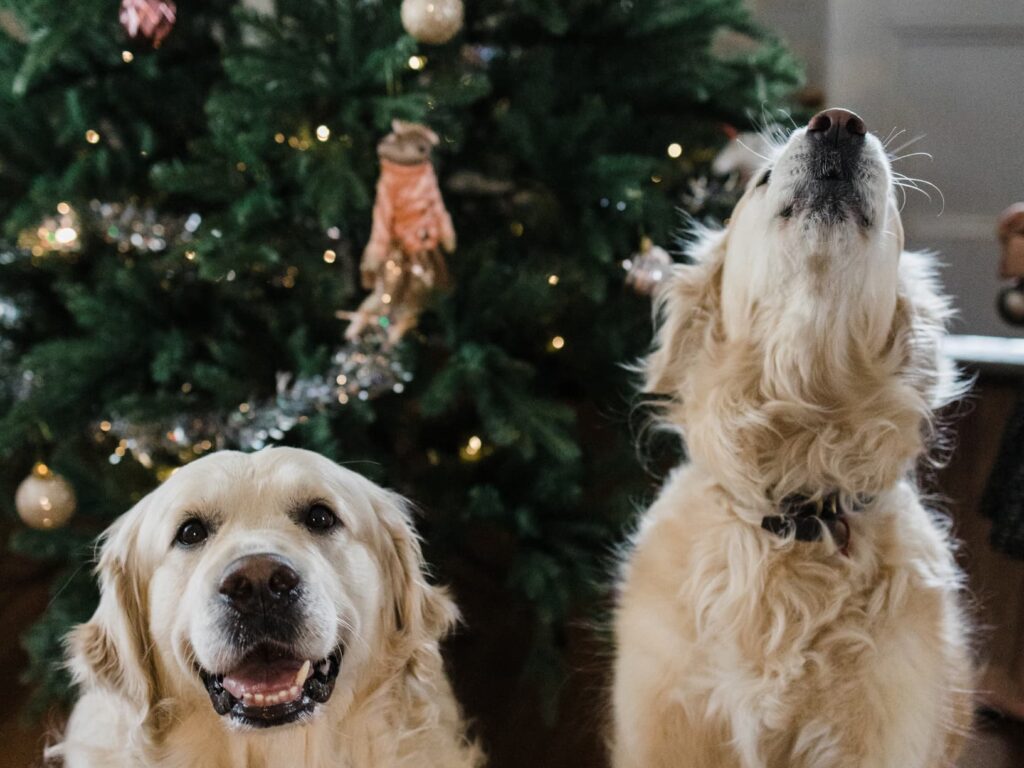
Ornaments, tinsel, wreaths, string lights, candles, and more festoon our homes during this festive season—but some of these decorations can be dangerous to your dog. A dog’s degree of risk with any decoration depends on how likely they are to chew on or eat it, so knowing your pooch’s inclinations is crucial.
“If you feel like your dog has a tendency to chew on things, especially new items you’re bringing into the house, be extra careful,” said Brian Collins, DVM, Diplomate of the American Board of Veterinary Practitioners, and an extension veterinarian and faculty clinician at the Cornell University College of Veterinary Medicine. Novelty may entice your dog to approach nativity-scene figurines as chew toys, so keep delicate dioramas out of reach. And keep any tinsel higher up on the tree to prevent your dog from chewing on a hanging piece; dogs who swallow foreign objects can suffer from an obstructed digestive tract.
Be careful where you place lit candles, too, as pets can accidentally knock them over. Whether you’re lighting scented candles, the menorah, or the kinara, Dr. Collins recommended extreme caution. (As a volunteer firefighter, he’s “very, very nervous about fires.”) So a mantel or your table’s center—any place that’s inaccessible to your dog—is the best spot for flames. If your dog is inclined to jump up on the table, keep chairs and stools out of the way, too. And don’t leave burning candles unattended; consider using flameless, battery-powered or electric candles instead.
Electric lighting like string lights can be just as hazardous as candles. Curious puppies who may chew everything in sight are especially at risk of electrocution. Dr. Collins said he unplugs these decorations when he’s not around, so consider this another form of holiday cheer that requires supervision.
Wires also pose a tripping hazard; if those wires or lights connect to something bigger, like your tree, then your dog can suffer some real damage. Make use of tape, cord covers, and cord organizers.
As for ornaments—which may resemble your dog’s favorite ball but are way more fragile—take care that they don’t shatter on the floor. Hanging figurines or stuffed animals could look like new toys and pose a choking hazard. If you have a big dog with a strong tail, watch out for powerful wags that may knock ornaments to the ground.
How can I keep my dog safe around holiday gifts?
As you’re wrapping presents, keep food gifts—such as cheese or poisonous-to-dogs chocolate—out of your dog’s reach at all times. You can’t just shove these to the back of your closet; canines’ famously acute noses make sure of that.
“A fairly common problem is dogs sniffing out [presents] because they can smell things a lot better than we can,” Dr. Collins said. Storing such temptations on a high shelf means dogs can sniff, but not touch. These gifts shouldn’t sit under the Christmas tree, even for one night—their smell may be too alluring.
Consider also stowing stuffed animals, which dogs may claim as their own, on a high shelf. Watch out for battery-operated toys. Alkaline dry cell batteries (think AA) contain potassium hydroxide or sodium hydroxide, which can cause ulcers when in contact with tissue. And disc-shaped batteries can actually let an electrical current pass through the gastrointestinal (GI) tract, causing tissue damage or perforation of the mouth, esophagus, stomach, or small intestine.
Ribbons, bows, and tape can also harm your dog if ingested. Dr. Collins recommended keeping all your gift-wrapping supplies in a tote bag that your dog can’t access when you’re not using them.
As you’re unwrapping gifts, keep an eye out for your dog, who may sniff around discarded paper or try to swipe a chocolate Santa.
Are Christmas trees and other holiday plants dangerous to dogs?
Whether you have a live or artificial tree, secure it so it doesn’t tip over. Hooking the tree to the wall or ceiling can further stabilize it, and pitching it in a corner keeps it out of the way.
If you have a live tree, prevent your dog from drinking from the tree stand. Dr. Collins recommended frequently changing the water. A wire screen over the stand—or another kind of barrier, like a baby gate—could help protect your dog. Vacuum or sweep up pine needles daily, as these may irritate your dog’s GI tract. If you have an artificial tree, pay attention to whether your dog treats it like a giant chew toy. If so, consider gating the tree off entirely to eliminate the possibility of your best friend swallowing a faux bough.
If you deck the halls with boughs of holly, do so with caution. While the plant is “relatively mild in toxicity,” Dr. Collins said, “ingestion of the berries and leaves can lead to vomiting, diarrhea, and lethargy.” Dogs who ingest large amounts can experience more severe signs, like difficulty walking. And don’t leave holly out past its prime. As it dries, it drops its berries, making it all the more dangerous to dogs.
Mistletoe can be quite toxic to dogs. Ingesting any part of the plant can cause severe vomiting, diarrhea, labored breathing, shock, and even death, according to Dr. Collins, who added that an immediate call to the vet or poison control is in order if your dog has chewed mistletoe. “I would not recommend having this plant in a house with dogs,” he said.
Poinsettias have a bad reputation, “but are only mildly toxic,” Dr. Collins said. If your dog chews on one of the broad red or green leaves, they may end up with an irritated mouth due to the plant’s milky sap. They may also experience drooling (and consequently lip licking) and, rarely, diarrhea. Poinsettias are safe enough to keep at home, Dr. Collins said, but it’s still best to keep them out of your dog’s reach.
Amaryllis plants contain toxins throughout, but at highest concentrations in the bulb. Depending on how much a dog ingests, signs may include vomiting, diarrhea, lethargy, tremors, shallow breathing, and abnormal heart rhythms, Dr. Collins said. Rarely, dogs who ingest amaryllis can die. While it would take large quantities to induce severe illness, keep the bulbs or whole plants out of your home if there’s any doubt about whether your dog could get ahold of them.
Pinecones, which may comprise a wreath or adorn a tree, aren’t toxic themselves, but are choking and digestive-obstruction hazards.
Opt instead for a Thanksgiving or Christmas cactus, which is a safer holiday option. (Still, ingesting a large amount of cactus could cause a dog mild GI upset.)
How can I keep my dog safe around holiday foods?
You can find a comprehensive list of holiday foods your dog can and can’t safely enjoy in our guide.
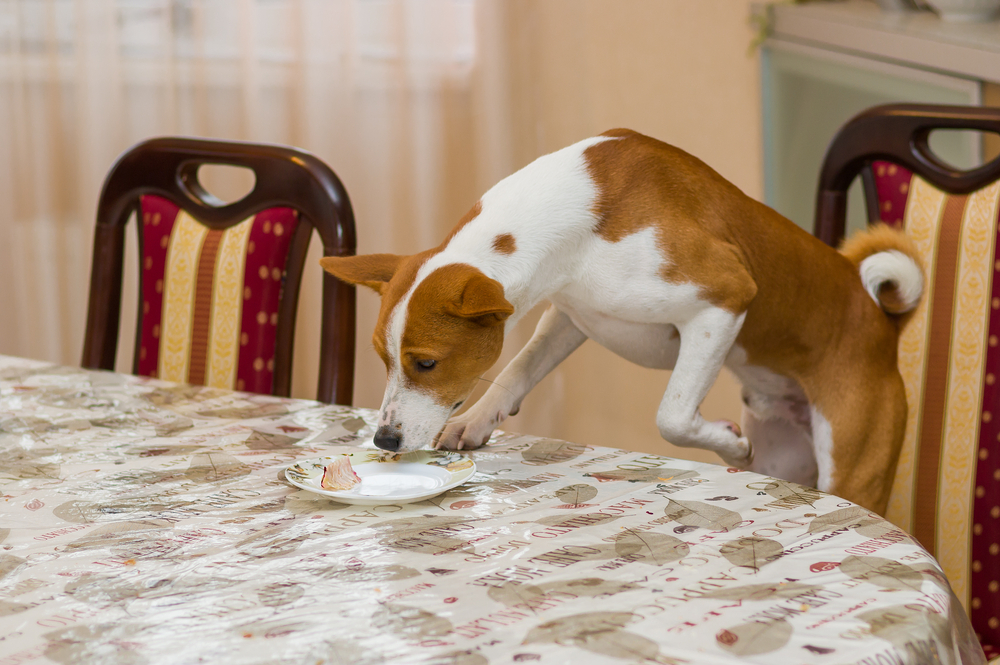
Whether you’re hosting a repast or cooking holiday favorites just for yourself, be careful during kitchen prep as your ingredients—including toxic onions and garlic—may fall to the floor, or your dog may try to snatch food when you’re distracted. A spry Chihuahua or towering Great Dane both make likely culprits.
“It might just be best to completely keep them out of the kitchen,” Dr. Collins said of dogs who like to steal scraps. A dog in a cramped or busy kitchen can also create a hazard for humans, courting accidents like tripping or dropping oven-hot casseroles and sharp knives. Put up a gate to keep them out, then busy them with a vet-approved chew toy or puzzle mat.
Here are some foods you should never give your dog, during the holidays or otherwise:
- Onions and garlic. These are toxic to dogs.
- Raisins, currants, and grapes. Not only are these toxic, but very tiny amounts of them can even be fatal to dogs—and it’s not always predictable how much it will take to cause serious harm (meaning: Sometimes, a single grape or raisin can pose a real hazard to a large dog). Keep your dog away from them.
- Chocolate: This human favorite is famously poisonous to dogs. That’s because it contains theobromine and caffeine—compounds belonging to the group methylxanthine alkaloids. Dogs have a much harder time metabolizing them than humans do, and they stay in their systems much longer. Theobromine is toxic to dogs and affects the central nervous system, heart, and respiratory system.
- Sugar substitutes, including xylitol (aka birch sugar): Even small doses of these ingredients in sugar-free desserts and candies can cause low blood sugar, liver failure, seizures, and death in dogs.
- Unbaked rolls: Raw bread dough, which contains yeast, can cause gas and bloating in dogs.
- Fully dressed turkey (Turkey that’s been prepared with extras like butter, salt, spices, onions, etc.).
- Ham: It isn’t toxic, but is extremely high in sodium and fat, and sometimes sugar; this can contribute to health problems such as heart disease and obesity, or pancreatitis (caused by dietary indiscretion and too-fatty foods).
- Stuffing: It contains butter, herbs, and spices that are unsafe for your dog’s digestive system.
- Turkey, chicken, or ham bones: They are a choking hazard, and can splinter and cause an obstruction or laceration when ingested.
- Mashed potatoes: They typically contain butter, milk, and salt.
- Latkes: Fried in oil and usually made with onions, potato pancakes are dangerously high in fat and contain toxins.
- Citrus: These fruits’ flesh, seeds, and peels may cause GI irritation if ingested.
- Pie: Avoid sharing your holiday dessert, as nutmeg, a common ingredient, is poisonous. And other common pie ingredients can cause gas, bloating, or worse in dogs.
The safest thing is to stick to your dog’s regular diet. You can top off their dinner or make a bowl for them with small portions of unseasoned, cooked foods like plain sweet potato, pumpkin, carrots, apple slices, green beans, or broccoli in bite-size form. Keep portions small; any extras should make up no more than 10% of your dog’s daily caloric intake.
As the festivities wear on and the garbage fills, you’ll also have to make sure your dog doesn’t go poking their nose through scraps. A dog sticking their head in a garbage bag is a safety hazard in itself, and looking for bones or other potentially toxic discards could hurt them. Consider keeping the garbage in a cupboard, the garage, or a separate room that your dog can’t access easily, and ensure your garbage can isn’t prone to tipping over.
On Christmas Eve, you or your kids may want to leave cookies out for Santa. If they do, choose a chocolate-free cookie and set it someplace inaccessible to your dog.
How can I protect my dog when I have guests over for the holidays?
Hosting guests may stress your dog out. Before your shindig, plan how you’re going to keep your dog safe, calm, and happy throughout. This plan will vary depending on your dog’s behavior. “You need to know your dog,” Dr. Collins said.
Consider how you want your dog to interact with guests as they arrive. If you’re nervous that they will try to escape, leash, gate, or crate them—or keep them in a separate room altogether. A restraint or barrier can also prevent them from jumping up on people who may not want that. Devoting a whole room to your dog may also be a good option if they don’t thrive around lots of people, or if this is your first time throwing a party with a dog and you don’t know yet how they’ll fare. Some of your guests may have children who are still learning to interact appropriately with a dog and may need guidance from you or their parents. And your dog may not feel at ease around children, and thus require support.
As guests hang or stow their coats, ask them to be careful with what may be in their pockets. Dr. Collins warned that curious dogs may sniff out their contents, from sugar-free gum—which contains toxic xylitol—to edibles.
Even if you don’t confine your dog to a room or level of the house, giving them a hideaway offers an option to take a break from noise, excitement, and exuberant visitors. As much as humans love to use the dog as a way to get away from the party, the dog may need a retreat from humans, too. A dog-friendly room also keeps your pet safe from hazards that may be circulating throughout a party or feast. For example, you can make a rule that if folks visit the dog room, they must leave behind food, chocolate, or anything that constitutes a choking hazard. Check up on your dog regularly and make sure they have access to fresh water.
Setting house rules for guests if your dog is roaming freely can also avoid major problems. Not only must you resist your dog’s pleading eyes around forbidden food; you must entreat your guests to do so, too. Even the most loving, well-intentioned invitee can cause harm, be it by feeding the wrong thing or overtreating.
Here are some examples of rules you may want to set based on your dog’s individual needs:
- Ask the dog owner(s) before giving any treats.
- Only feed dog treats or dog food.
- Don’t leave any food or drinks unattended.
- Don’t give the dog any bones. (This should always be a rule.)
- (If your dog is in a separate room) No food, drinks, or small toys allowed in the dog room.
If your dog appears anxious when lots of people are around, give them a favorite toy or puzzle mat. And make sure they always have the option to opt out of interactions. This can prevent holiday events from becoming too stressful for them, and from escalating into dangerous situations.
Here are some signs your dog may feel anxious:
- Restlessness
- Irritability
- Pacing
- Panting
- Salivating
- Excessive barking or other vocalizations
How can I keep my dog safe during holiday travel?
If you’re traveling this holiday season, have a plan for your dog. Perhaps you’re boarding them while you’re gone, or dropping them off with a trusted friend or relative. If your dog is joining you on this journey, know their accommodations ahead of time, wherever you’re staying, and the closest vet, emergency clinic, or animal hospital. Bring their bed, too.
And then there are precautions for various modes of transit. If your dog is a nervous traveler, or has never traveled before, discuss strategies for managing their anxiety with your veterinarian. If you’re driving, keep an eye on the windows—Dr. Collins warned that dogs can accidentally open them. A seatbelt harness can secure your dog in the backseat. Bring their blanket, toys, and food for the trip. And watch out in case your dog gets motion sickness.
Find out ahead of time if other guests are bringing their pets, or whether there are animals sharing the accommodations. Perhaps different animals can stay in separate rooms if they don’t play nicely.
Watching out for our dogs during the holidays takes a little extra work, but it’s well worth the effort. This is a special time of year, and it should be happy and safe for the most special creatures in our lives.
The post How to Keep Your Dog Safe and Happy During the Holidays appeared first on The Farmer’s Dog - Digest.
Comments
Post a Comment