In this article:
- Basic corgi facts
- Best diet and feeding tips for corgis
- What are the two types of corgis?
- Corgi personality
- Should I get a corgi?
- Corgi breed history
- Corgi training
- Healthy lifestyle for corgis
- Exercise
- Grooming and bathing
- Common corgi health problems
- Where to get a corgi
This article was originally published in December of 2021, and has been updated.
There are two separate recognized corgi breeds: the Pembroke Welsh corgi and the Cardigan Welsh corgi. We’ll discuss their differences, but they have much in common: The herding dogs are smart, affectionate, and long. In fact, until the mid-1930s, the UK’s Royal Kennel Club considered them a single breed. Corgis have tiny legs and an infectious smile—but they’re working dogs who need a lot of physical and mental exercise. Read on if you’re trying to decide whether to bring a corgi home, or want to learn more about how to care for the one who’s already there.
Basic corgi facts
One oft-repeated explanation for the word “corgi” is that it translates to “dwarf dog” in Welsh. There may be some debate on the etymological front, but Pembroke and Cardigan Welsh corgis both have short legs and long bodies, which are useful for more than making them photogenic. The herding dogs’ shape keeps them low to the ground, where cattle are less likely to kick them. According to the American Kennel Club (AKC), female Pembrokes can weigh up to 28 pounds, while males may reach 30. They live an average of 12 to 13 years. Female Cardigans weigh 25 to 34 pounds, and males range from 30 to 38. The average lifespan of a Cardigan is 12 to 15 years. Corgis need ample training, and many of them learn quickly. They’re known to bond closely to their families, and thrive with plenty of play, exercise, and other enrichment.
Best diet and feeding tips for corgis
Like all dogs, corgis will do best with a healthy diet of complete and balanced food, fed on a regular schedule. Fresh food from The Farmer’s Dog is developed by on-staff, Board-Certified Veterinary Nutritionists® to be complete and balanced according to AAFCO standards. It comes pre-portioned according to your dog’s age, breed, weight, and more, supporting weight management and healthy aging.
Cute, clever, and food-motivated, corgis have the motive and the means to get more than their fair share of food. But excess weight in dogs is linked to ailments like diabetes and cancer, and an overweight corgi is more likely to develop intervertebral disc disease (IVDD) due to the strain the extra pounds can put on their spine. A pre-portioned fresh-food plan can be one helpful tool as you strive to feed your corgi the right amount.
What are the two types of corgis?
According to the AKC, while Pembroke and Cardigan corgis share many qualities, the two breeds actually do not share a common ancestor and hail from different parts of Wales. Here are some of the noticeable differences between the two:
| Pembroke Welsh corgi | Cardigan Welsh corgi | |
| Average weight | Up to 28 pounds (females); up to 30 pounds (males) | 25–34 pounds (females); 30–38 pounds (males) |
| Average lifespan | 12–13 years | 12–15 years |
| Height | 10–12 inches | 10.5–12.5 inches |
| Coat | Short but thick double coat: red, sable, fawn, or black and tan | Medium-length double coat: black, blue merle, brindle, red, gray, and sable, with some white areas |
| Tail | Most have long, natural tails; a small number are naturally bob-tailed. The AVMA opposes tail-docking for cosmetic purposes. | Usually has a long, fox-like tail |
| Ears | Smaller, pointier | Larger, more rounded |

Moose: “I was told by the vets that I should look into changing Moose’s diet. Moose has always been a very active dog but we’ve struggled getting him to the desired weight for corgis his age. No matter what we tried, Moose just couldn’t lose the 3 pounds he needed to in order to get to the goal weight. Once he began eating The Farmer’s Dog, we hit the goal weight in no time!” —Moose’s human, Cameron Johnson

Corgi personality
All dogs are individuals, so you shouldn’t expect your Pembroke or Cardigan to conform to any preconceived notions of what their breed is like. There are some common experiences among corgi owners, but be ready to love and take care of the specific dog you have. Having said that, some sources we spoke to made observations about the particular corgis in their own lives.
“I’m finding that the Cardigan is a little more stubborn and also a bit more of the clown,” said Lisa Rabenold of East Coast Corgi Rescue. “Pembrokes can be very serious,” she said. “They’re very serious about what they’re doing. They’re very serious about going for that walk, they’re very serious when it’s time to play ball. To them, we’re not going to diverge for anything, because the ball’s what’s most important.” On the other hand, with the Cardigans, “you’ll throw the ball, they’ll start going—and all of a sudden, a squirrel goes by and they start barking at the squirrel,” she said.
Corgis famously look “happy to be here” thanks to an infectious smile. To stay happy, they’ll require plenty of exercise. A working dog needs a job to do. Both types of corgis love spending time with their people and burning off energy through play.
Even if they don’t work on a farm, many corgis will display herding behavior. Deborah Levy, who owns Rowdy, said, “He’s particularly concerned when his ‘herd’ (my husband and I) are not in the same room together. If my husband and I are apart, he’ll calculate the exact point between us and lie there so he can keep an eye on both of us.”
This is a theme among corgi owners. Dickey Richardson told the following story from his time in Montana, about his two corgis named Otto and Wobble: “Neither Otto nor Wobble ever received training to herd and corral cattle, but both did so by instinct. One day a huge Black Angus bull broke down a fence and invaded our south field. At this time, Wobble was very little—about 16 weeks old. You would have imagined he was a 16-year-old, fully trained herding dog. He and Otto drove the 1,000-pound bull back into his pasture.”
Many corgis also like to stick to a schedule. Molly Mulcahy, loyal human to a corgi named Reesa, said of her dog: “Each morning she’s anxious to lead me into the living room to enjoy my coffee; and at the same time each night, she needs everyone to get into the same room to relax and unwind.”
And, while virtually any dog will bark sometimes, both Pembroke and Cardigan corgis have earned a reputation for being especially vocal—so know that if you make one a part of your family, you may have less quiet time than you’re used to.

Bentley: “Before The Farmer’s Dog, Bentley would get bored of his food (kibble) and go on hunger strikes. Since switching to The Farmer’s Dog, he always eats and never gets bored of his food. ” —Bentley’s human, Paula Stephenson
Should I get a corgi?
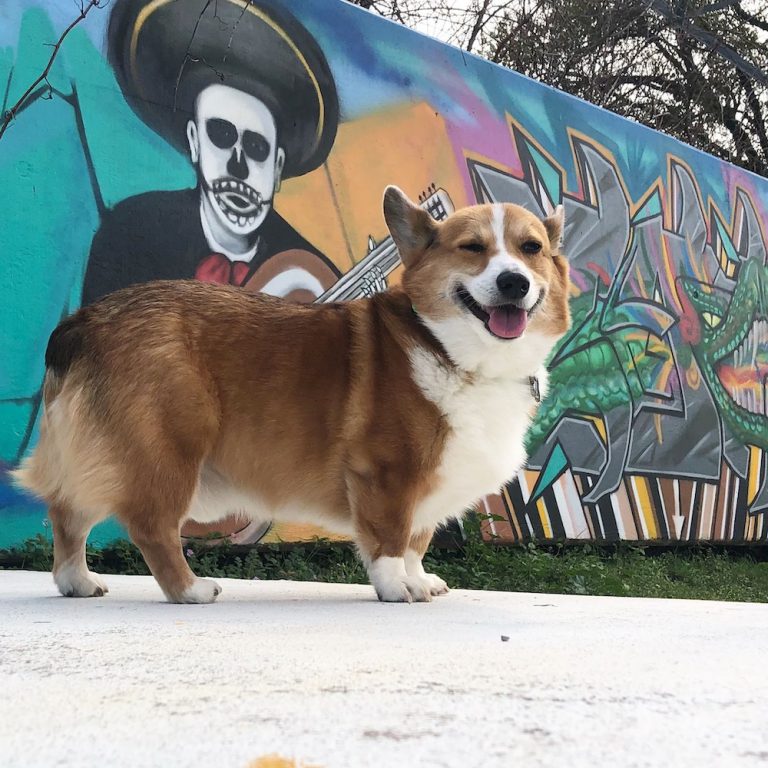
Corgis’ powerful combination of energy and smarts can achieve great things, but owners must provide exercise and enrichment.
Rabenold warned that corgis’ stature can be misleading: Despite their tiny legs, she said, “They are not a small dog.” While corgis demand ample exercise and training, there’s a positive side to those requirements. For “somebody who wants a German shepherd but doesn’t really have the space,” she said, “a corgi can fill that need.”
Melissa Terzis, founder and executive director of East Coast Corgi Rescue, said that families with kids need to prepare everyone for a positive relationship with their new pet. “There are parents who will write and say, ‘I grew up with corgis. My kids have always had corgis. They’re used to it. They respect their space,’” she said, discussing adoption applications. “That’s totally different than, ‘My kids are really excited and have been following corgi Instagram accounts.’”
For corgi loyalists, there’s no better dog. Rabenold sang their praises as good dogs for owners who want to be more active. Thanks to their high energy and a tendency to want a routine, she said, corgis are “the best personal trainers you could ever have.”
Terzis recalled her husband, at one time a corgi novice, marveling that “you talk to them in complete sentences and they get it.” And, she added: “I love the fact that it was like a big dog, but I could leave a plate of cookies on the kitchen counter and they can’t get it.”
Corgi breed history
Corgis have a creation myth; according to Welsh legend, fairies used to ride the low, long dogs into battle. The AKC says that the tale is specific to the Pembroke Welsh corgi. And, as myths go, this one may be on the newer side. We can’t confirm the origin of this story, but some internet sleuths believe it may have first been advanced by Anne G. Biddlecomb—a Pembroke Welsh corgi breeder. The year? 1946.
According to the AKC, the Cardigan is the older of the two recognized corgi breeds, having come to Wales around 1200 BC. Pembrokes, the new kids on the block, arrived in 1107 AD when Flemish weavers moved to Wales and brought their herding dogs along.
Notable corgi fans include the late Queen Elizabeth II of the United Kingdom, who owned dozens of Pembroke Welsh corgis and dachshund-corgi mixes, as well as a King—horror author Stephen, that is, who often calls his corgi, Molly, “The Thing of Evil” in social media posts.
Queen Elizabeth bred 14 generations of Pembrokes, starting with one she received in the 1940s when she was a teenager. The Royal Kennel Club credits her—and, more recently, the series The Crown—with popularizing the breed.
One well-known fictional corgi is Cheddar, the devoted companion of Captain Ray Holt and Kevin Cozner in Brooklyn Nine-Nine. Another is Ein, the super-intelligent dog on the animated show Cowboy Bebop.
Corgi training
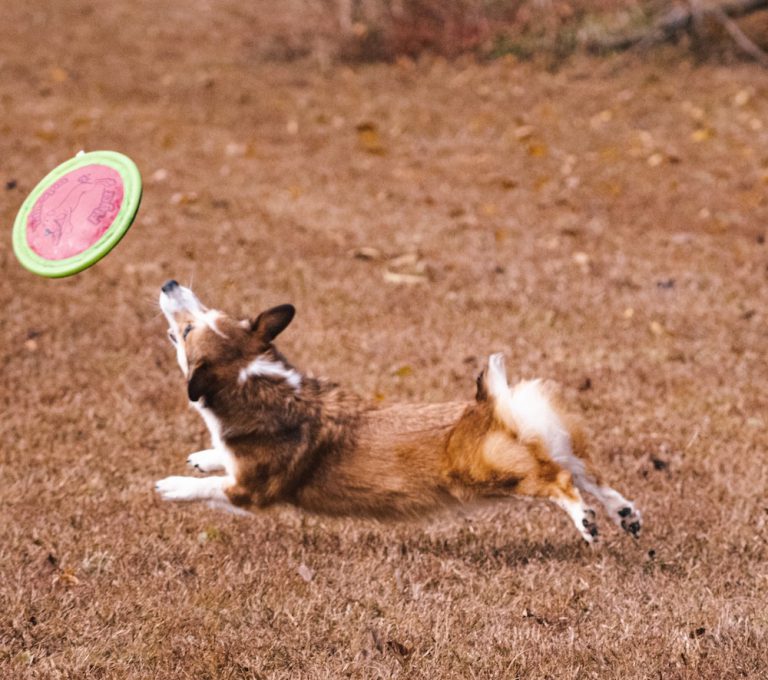
Like any other dog, corgis can benefit from crate training, socialization, and instruction in basic commands.
Finding an appropriate activity can be a good way to build your bond with your corgi, and keep their minds and bodies active. At home, food puzzles can engage corgis’ minds during mealtimes, but the dogs have also proven adept at obedience, agility, barn hunt, and, of course, herding, among other pursuits. Whatever you try, make sure your corgi enjoys it—not every dog is the same, and many corgi owners will tell you that sometimes, for whatever reason, their dog doesn’t take to a certain activity. Chances are, if you try enough options, you’ll find something your dog loves to do.
“Their minds are constantly looking for something to do, and being in an apartment while you’re at work is not a place where a corgi needs to be—because they will eat your house. Absolutely, they will find something to do. And it might not be what you want them to do.”
Lisa Rabenold of East Coast Corgi Rescue
Corgis can be independent thinkers, so you may have to get into their minds a bit and discover what motivates them. Tammy Lam owns a corgi named Shayla who herded goats on a farm before being adopted by her new human. Said Lam: “Because they are smart, they are very trainable—especially with treats—but they will give you some sass, and are not always obedient.”

Healthy lifestyle for corgis
Exercise
According to Clean Run Magazine, the first dog to ever win agility’s “triple crown”—three national championships in one year—was a Pembroke Welsh corgi named Becky, who did so in 1997. Your corgi doesn’t need to compete for trophies, but they’re likely to enjoy life a lot more if they have daily opportunities to play hard. Some corgis pack a lot of energy into a small frame. Lynne Saucedo, who owns a corgi named Korra, said that her dog “can play all day with her doggie friends and still want to play [more] while everyone takes a nap.”
Patrick Powers, who owns Zoey, said that she has “adopted” a full-size soccer ball, and “would rather play soccer than eat or drink.” Corgis’ athleticism might come as a surprise if you know them primarily as social-media goofballs, but it makes sense considering their historic role as herders. Rabenold said that herding instincts make some corgis especially enthusiastic about fetch. “You’re throwing a ball away,” she said, “and to them, they’re seeing that as something that has to come back to you. ‘It’s running away. I have to bring it back.’”
The bottom line, per Mulcahy, is that corgis “need lots of activity to let their energy out, or you’ll end up with lots of chewed-up pillows, shoes, and remotes.”
While corgis can run, they have short legs—so make sure you’re not going too fast and far for them. They need a generous supply of water to stay hydrated. And because corgis’ long spines make them vulnerable to intervertebral disc disease (IVDD)—a condition that can lead to severe consequences including paralysis—you shouldn’t let them jump off of furniture (give them a lift or a ramp instead). Read more about IVDD in the “Common corgi health problems” section below.

Grooming and bathing
Corgis shed a lot. Even some corgi owners who thought they knew this will tell you that they were not fully prepared for the deluge of dog hair deposited daily. Nancy Connell, who owns corgi Theo, stressed the importance of “investing in a really good vacuum.” Expressing a common sentiment, Rod Marin—the owner of a corgi named Poppi—said that “We had heard about corgi shedding, but didn’t realize it would really be a full-time job in terms of upkeep.”
Of the two corgi breeds, the Pembroke tends to leave more hair everywhere, and will likely require daily brushing. Once a week should be enough for the Cardigan. While you should keep up with brushing, don’t shave the undercoat in summer—it helps your corgi stay at a comfortable temperature year round, including keeping cool in the warmer months.
Corgis’ nails should be trimmed from time to time to avoid discomfort and pain—you’ll probably have to do so less frequently if yours regularly walks on sidewalks. When you do trim your corgi’s nails, stop before cutting the quick, which hurts dogs and causes bleeding. If you aren’t sure how best to go about nail trimming, ask your vet to demonstrate or have a trusted groomer take on the task.
There’s no need to bathe your corgi more than once a month under normal circumstances. You can bathe your dog less frequently if they look and smell clean. If they roll around in the mud, for example, it’s time to clean them! Be sure to use a shampoo formulated for dogs and not the human stuff, which is likely to contain ingredients not suitable for your pal.

Common corgi health problems
Cardigan Welsh corgis and Pembroke Welsh corgis are typically healthy and relatively long-lived breeds, with average life expectancies of 12–15 and 12–13 years, respectively. But they are predisposed to certain conditions. Being vigilant about these can help improve the length and quality of your corgi’s life.
Degenerative myelopathy: Pembroke and Cardigan corgis are both at risk of this disease, which is similar to the human ailment amyotrophic lateral sclerosis (ALS). Dogs with degenerative myelopathy can experience weakness and eventually paralysis of the hind limbs as their spinal cords deteriorate. Early symptoms can arise in corgis starting at around 9 years old, and may include hind-limb weakness, falling over easily, and difficulty standing up after lying down.
Rabenold, who has had a corgi with degenerative myelopathy, said that the condition can be particularly devastating because, while an impacted dog’s body cannot move as it once did, “their mind still wants to play.” While treatment can improve a dog’s quality of life, there is no cure for degenerative myelopathy. Genetic testing is now available—if you’re planning to get a corgi, ask whether yours has been tested for the gene mutation associated with this condition.
Von Willebrand disease: Dogs with this inherited disorder don’t have enough of a protein that helps blood clot (similar to hemophilia in humans), and the Cornell University College of Veterinary Medicine lists Pembroke Welsh corgis among the breeds with a high prevalence. While some dogs with vWD will not show symptoms, others may bruise or bleed excessively. Injuries and surgeries are particularly dangerous for dogs with this disorder. Knowing that a dog has vWD will impact how vets treat injuries, which medications they prescribe, and their approach to surgical procedures.
Dental problems: Corgis may suffer from periodontal disease. Because this often impacts the roots of their teeth, a vet may need to perform X-rays to detect it. Be sure that your vet regularly examines your dog’s teeth during checkups, get professional cleanings if necessary, and institute a daily toothbrushing routine at home.
Progressive retinal atrophy: This is a genetic disease that causes degeneration of the retina and leads to blindness. It can occur in any dog, but Cardigan Welsh corgis have genetic variants that put them at a higher risk. There is no effective treatment.
Obesity: Excess weight is a major health concern for corgis, and is linked to conditions including IVDD, hip dysplasia, diabetes, and cancer. Monitor your corgi’s body condition, give them enough exercise, feed them an appropriate amount of fresh, healthy food, and consult with your veterinarian if you have questions about their size.
Intervertebral disc disease (IVDD): IVDD is a degenerative disease impacting dogs’ spines, and the shape of corgis’ bodies makes them more vulnerable than most breeds. Extra weight puts more pressure on the spine, making herniated discs more likely. Signs of IVDD include dragging or weakness of the hind limbs, refusal or reluctance to move around, a hunched back or neck, or crying out in pain. If you notice any of these symptoms, bring your dog to the vet immediately—prompt treatment can make a huge difference in their prognosis.
Hip dysplasia: This is a genetic condition in which the ball and socket of the hip joint do not fit together properly, which could lead to arthritis or degenerative joint disease. Because hip dysplasia can cause your dog pain or cost them the use of the impacted joint, it’s important that your vet pays close attention to your corgi’s hips during checkups. If you notice symptoms like a newly limited range of motion, diminished willingness to move around, hopping, pain, or limping, have a vet check your dog out.

Where to get a corgi
If you’ve decided to get a corgi, a rescue organization like East Coast Corgi Rescue is a good place to start; there are many corgis and corgi mixes who need good homes. If you opt for a puppy, go to a reputable breeder. Said Rabenold: “A reputable breeder for any breed will make someone sign a contract that they will take the dog back when the owner cannot take care of them anymore. That’s huge in the corgi world. If they don’t have somebody sign a contract that the dog will be returned at any age, walk away from it—because then there’s something fishy. They’re not standing behind their dog.”
The post The Corgi Care Guide appeared first on The Farmer’s Dog - Digest.
Comments
Post a Comment