In this article:
- Why train your dog in nose work?
- Is nose work mentally stimulating for dogs?
- Can nose work reduce stress and anxiety in dogs?
- Can nose work make a dog more confident?
- Can nose work deepen your bond with a dog?
- How can you start a dog at nose work?
- How can you teach a dog nose work?
When Katenna Jones, ACAAB, owner of Jones Animal Behavior, first enrolled her dog Maison in a nose work class, she was hoping to build up her best friend’s confidence. “I wanted to learn about nose work, and she was a pretty shy, skittish dog, which is part of why we got her,” Jones said.
Maison, a brindle pit bull/mini bull mix with pointed ears and amber eyes, had a number of phobias. If Jones went to the bathroom and left the door slightly ajar, “She would sit outside the door, maybe stick her nose in and cry a little bit.” She would never open the door because, in Jones’s words, “she didn’t have the confidence to engage with objects.” The more nose work training they did, the more that began to change.
Nose work, also called scent work, is an activity that teaches dogs to use their strong senses of smell to track down hidden objects. As silly as these formal sniffing classes might sound, it’s highly enriching and, for some dogs, even transformative.
Take Maison, for example. Through nose work training, she learned to open coolers and boxes, unroll rugs, and flip things over. Over time, she became less reactive around other dogs. But the most gratifying moment for Jones came when Maison began shoving the bathroom door open with her face.
Jones believes that one reason nose work can be so helpful is its emphasis on letting dogs lead. This strengthens their sense of agency and helps them ignore outside noise to focus on the consistently satisfying task at hand. “It’s constant exploration followed by rewards,” she said. The most effective rewards tend to be a combination of verbal praise and treats and/or toys. Who wouldn’t enjoy that?
Thinking of starting nose work with your dog? Here’s what you need to know.
Why train your dog in nose work?
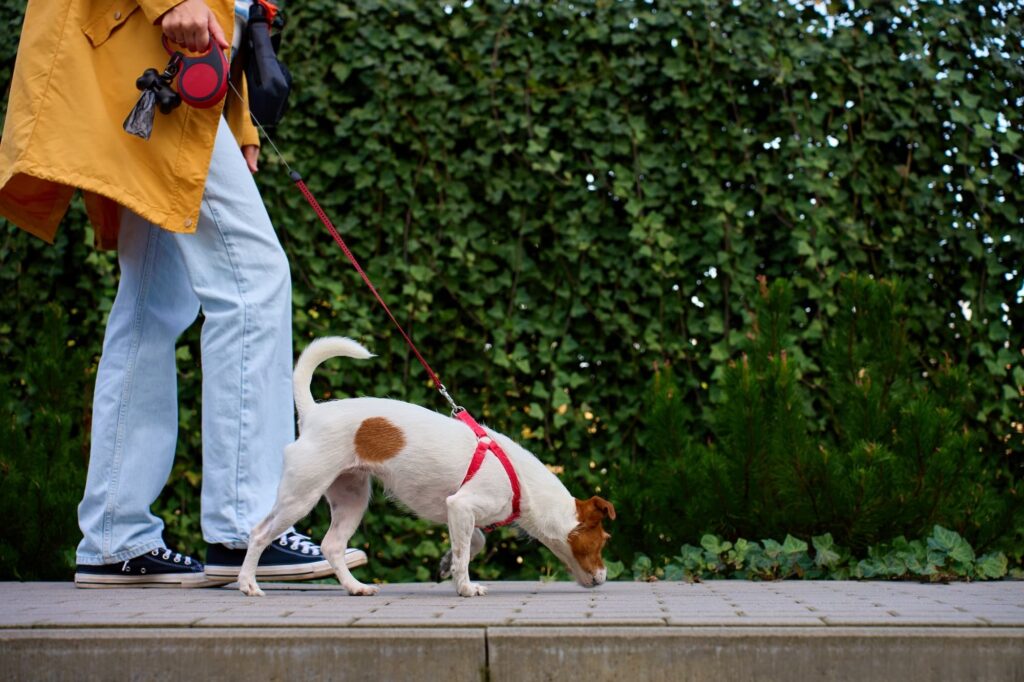
There’s a reason our dogs seem to navigate the world one sniff at a time. Their noses are sensory powerhouses, specially equipped with dedicated pathways for smelling (in contrast to our human noses, which have one measly pathway that handles both breathing and smelling). By strengthening this natural skill, nose work provides a safe, stimulating, confidence-building outlet to use up extra energy.
It’s mentally stimulating
Enrichment is crucial for dogs, and the most rewarding activities shift the focus away from control and toward meeting them where they are.
Zachary Silver, PhD, professor of psychology and director of the Canine Intelligence Lab at Occidental College, believes nose work can reduce stress, improve mood, and, in some cases, even reduce problem behaviors like excessive barking because it creates a job from a skill dogs have perfected for thousands of years. Outlets like these can be crucial for dogs.
“It’s obviously not a one-size-fits-all approach,” Dr. Silver said, “but for a dog that takes to this kind of enrichment, it really can be an effective tool.”

It reduces stress and anxiety
Enrichment doesn’t only keep our dogs from becoming couch potatoes; it also supports their mental and emotional well-being.
As nice as it might feel to let our brains rest once in a while, too much idle time can breed anxiety, and nose work taps into several different brain systems—prompting dogs to interpret scents and act on them while communicating with a human handler. “All of a sudden, there’s a lot going on in the brain,” Dr. Silver said. “And when the brain is active, the brain is happy.”
Nose work can be particularly helpful for dogs who feel overwhelmed in loud, busy settings, according to Stefanie Schwartz, DVM, MSc, DACVB, board-certified veterinary behaviorist and owner of Pet Behavior Medicine. In the short term, she said, “They’re using their intellectual and physical energy—using it up so that they’re more tired and more content.” And in the longer term, they’re building their concentration skills while learning to ignore stressful distractions. As Dr. Schwartz put it, “They learn to habituate to the noise and shut it out.”
It builds confidence
As one of the few training skills that encourages dogs to take the lead, nose work can strengthen dogs’ sense of agency—and, in turn, help them face their fears. For most of their lives, dogs are taught to do whatever their humans want, Jones said. By giving dogs space to embrace their true nature, nose work encourages autonomy and independence. We also create a setting where they can make choices, which can do wonders for their mental health and well-being.
“I kind of think of it like going to the beach, closing your eyes, and just listening to the waves,” Jones said. “They can just be, and do something that’s very natural to them.”
It deepens your bond
Any time you spend doing something fun with your dog is going to strengthen your bond, according to Dr. Schwartz: “Just walking your dog around the neighborhood is a team-building exercise.” And nose work might provide even more benefits.
According to Dr. Silver, working toward a common goal taps into a broader psychological phenomenon called “joint intentionality”—the cognitive ability that allows two beings to understand they’re working together toward a common goal. For a long time, scientists believed only humans could do this. But these days, a growing body of evidence suggests that dogs can do so as well.
“I think even beyond just spending time with a dog, doing something goal-directed with them would almost certainly lead toward them feeling that closer affiliation and connection,” Dr. Silver said. It’s certainly true for humans, so why not for dogs?
How to get your dog started in nose work
Pretty much any dog can do scent work. The only requirements are a nose, an appetite for rewards, and some degree of mobility.
Jones saw this when Maison grew old and could no longer walk outside. Even in her final days, Jones saw how much joy nose work brought her best friend—a beautiful reminder of how crucial enrichment can be for senior dogs. “She was wagging her tail and loving it because it was a fun activity instead of laying there, not getting any stimulation,” Jones said.
Jones believes classes are the best places for dogs to learn proper nose work. Dogs that excel can also go through more advanced courses and even compete in national competitions from groups like the National Association of Canine Scent Work, American Kennel Club, and United Kennel Club. But if your dog is reactive or fearful, or otherwise not up for travel, you can also try a more casual version at home.
How to teach your dog nose work
Step 1: Set the expectation
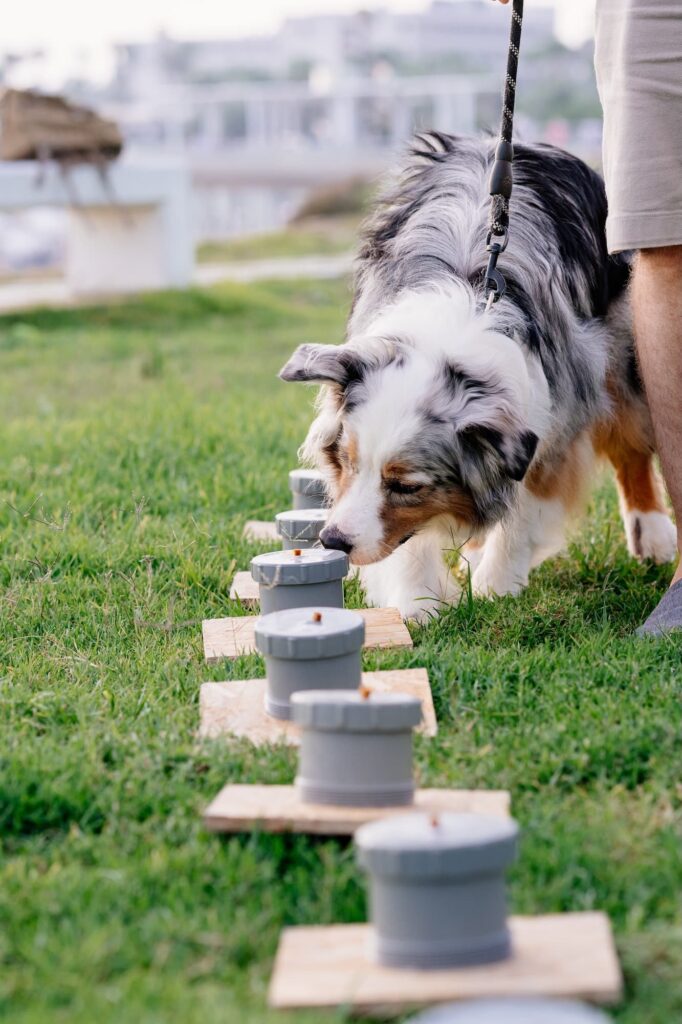
First, teach your dog that finding food equals rewards (even beyond the food itself). Drop food on the floor and offer specific praise when they pick it up—something like “good find!”—or, alternatively, hide food under one of two cups and offer treats and praise when they paw at the right one.
Step 2: Create a basic puzzle
Once your dog understands the reward structure, hide a treat under one of two or three cups while out of their sight. Then, let them investigate and offer praise and a reward the moment they nudge the right one with their nose or paw.
Step 3: Raise the difficulty
Once your dog understands how the basic game is played, get creative. Hide a couple of treats in a muffin tin, cover all the cups with tennis balls, and reward your dog for identifying the correct compartments—or hide a treat in one of several shoe boxes and let them find the right one. Each time your dog succeeds, offer praise and a food reward.
However you choose to teach your dog nose work—at home or through a class—the most important thing is to let your dog take the lead. Ultimately, your dog will let you know whether scent work is right for them. Success will look different for every dog and every person. In Jones’s case, it was a friendly face saying “hi” after opening the bathroom door.
The post So You Want to Start Your Dog at Nose Work appeared first on The Farmer’s Dog - Digest.
Comments
Post a Comment