In this article:
- How can I measure my dog for a Halloween costume?
- How can I get my dog comfortable in a Halloween costume?
- Do I need to get my dog ready for my own Halloween costume?
- What Halloween costumes are the easiest for dogs to adjust to?
- Can Halloween costumes be too hot for dogs?
This article was originally published in October of 2024, and has been updated.
October is a spooky time of year when the leaves change, the air gets crisp, and dog people everywhere must make the chilling choice: Is their best friend going to be a pumpkin or a ghost for Halloween? Okay, it’s not a very scary decision for you; more like a delightful appraisal of possibilities. But while you may enjoy dressing your pal up for the day, does your dog share your seasonal enthusiasm? How can you make sure that your dog won’t get spooked by their own clothes come All Hallows’ Eve?
It’s a relevant question in many American households. We spend a lot of money on pet costumes every year. According to the National Retail Federation (NRF), we are projected to spend $13.5 billion on costumes for people and pets, candy, decorations, and cards in 2026. $920 million of that total is earmarked for pet costumes.
We can expect small armies of four-legged bumblebees, demons, pumpkins, and more running around at the end of October. And while we’re planning our festivities, it’s a good idea to spend some time before the 31st getting your dog acclimated to clothes they don’t usually wear.
Do all dogs hate costumes? No—some tolerate them well. Some have plenty of experience with getting dressed up, either for fun or for extra warmth. But these dogs are generally the exception. We spoke to Shelby Semel of Shelby Semel Dog Training in New York City (home of several Halloween costume contests for dogs), and Brittany Baumann of the Animal Humane Society in Minnesota, about the best tips for getting your buddy used to their brief moment as a pirate (or a little delivery person. Or an oversized lobster. Or a non-threatening Cerberus.) If your favorite Halloween treat is a photo of your dog all dressed up, then here’s how to make sure they don’t feel tricked.
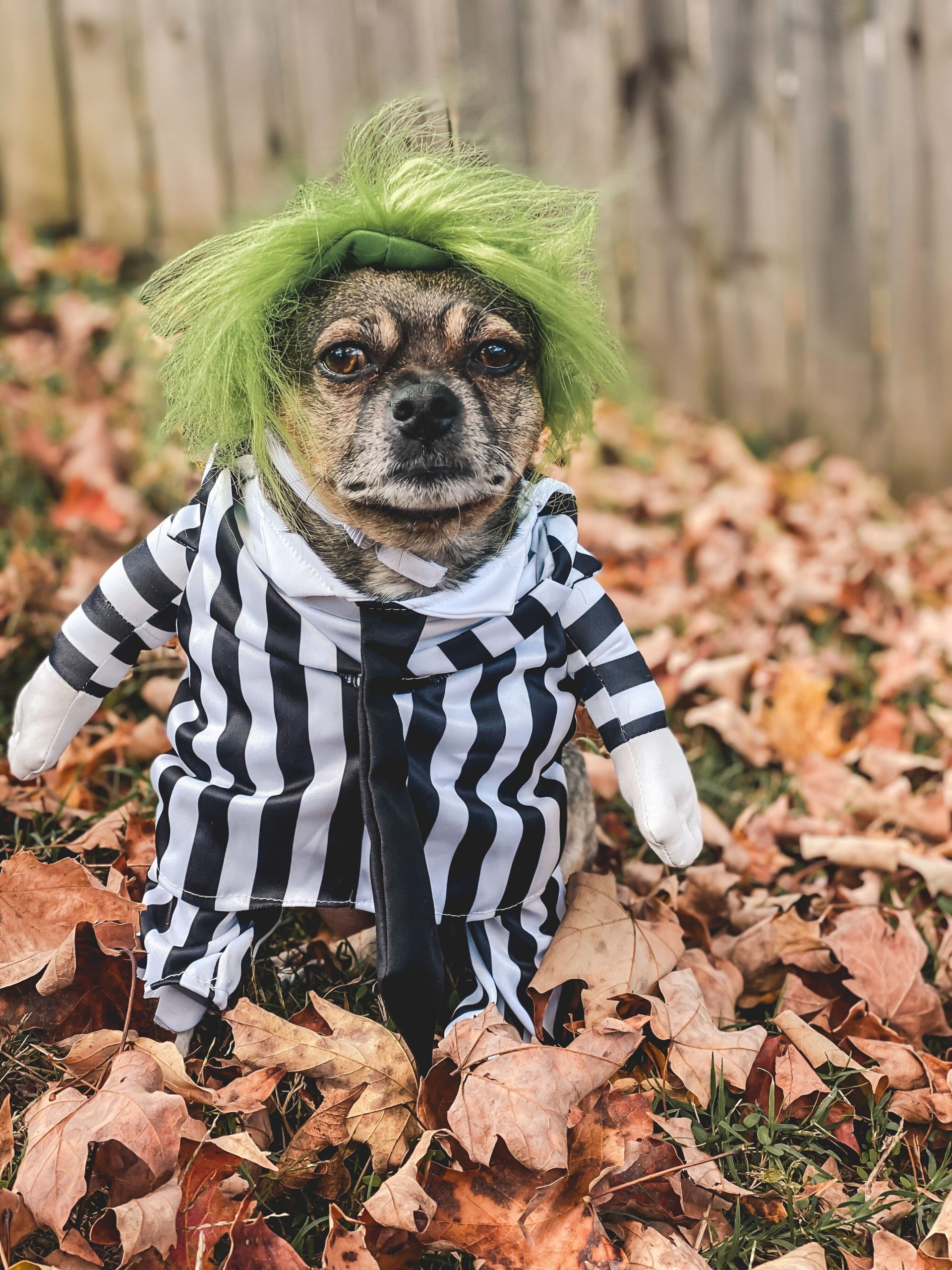
When was the last time you measured your dog?
One major step that many people forget when ordering a costume, according to Baumann, is to measure your dog. Calculate “their body length, their chest, and their neck girth” to ensure a safe fit. To test the fit, look ahead and order (or make) the costume early, so it’ll arrive at least a few weeks before the big day.
“You want to make sure that your dog can see, hear, walk, bark in the costume very comfortably,” she said.
Introduce them to the costume slowly. Very Slowly.
The second advantage to ordering the outfit early is that you can start getting your dog used to their alter ego right when it arrives in the mail. Start slow—slower than you may think. Begin indoors to cut down on distractions and triggers, and allow them to sniff the costume and be around it before even making an attempt to put it on. Offer them treats when they sniff it to begin building those positive associations. If that goes well, you’ll want to take two to five minutes, followed by longer intervals, every day leading up to Halloween, to let them practice wearing it.
“Put it on a little bit loosely at first and give them a spoonful of [plain, roasted, xylitol-free] peanut butter while you put it on,” Semel said. “Maybe do some fun tricks while they wear it. Keep it on for two to five minutes, take it off, and then do it again later in the day or the next day.”
If the costume has five parts, Semel said, put on the main part first, offer them a treat, and, if they tolerate that, add the next part the following day with more treats. Monitor how they’re handling each piece and, if they’re obviously stressed, decide whether to go even slower or forgo any unnecessary parts of the costume.
“There’s no rule that says you have to buy the dog outfit and you have to put on all the different pieces,” Semel said.
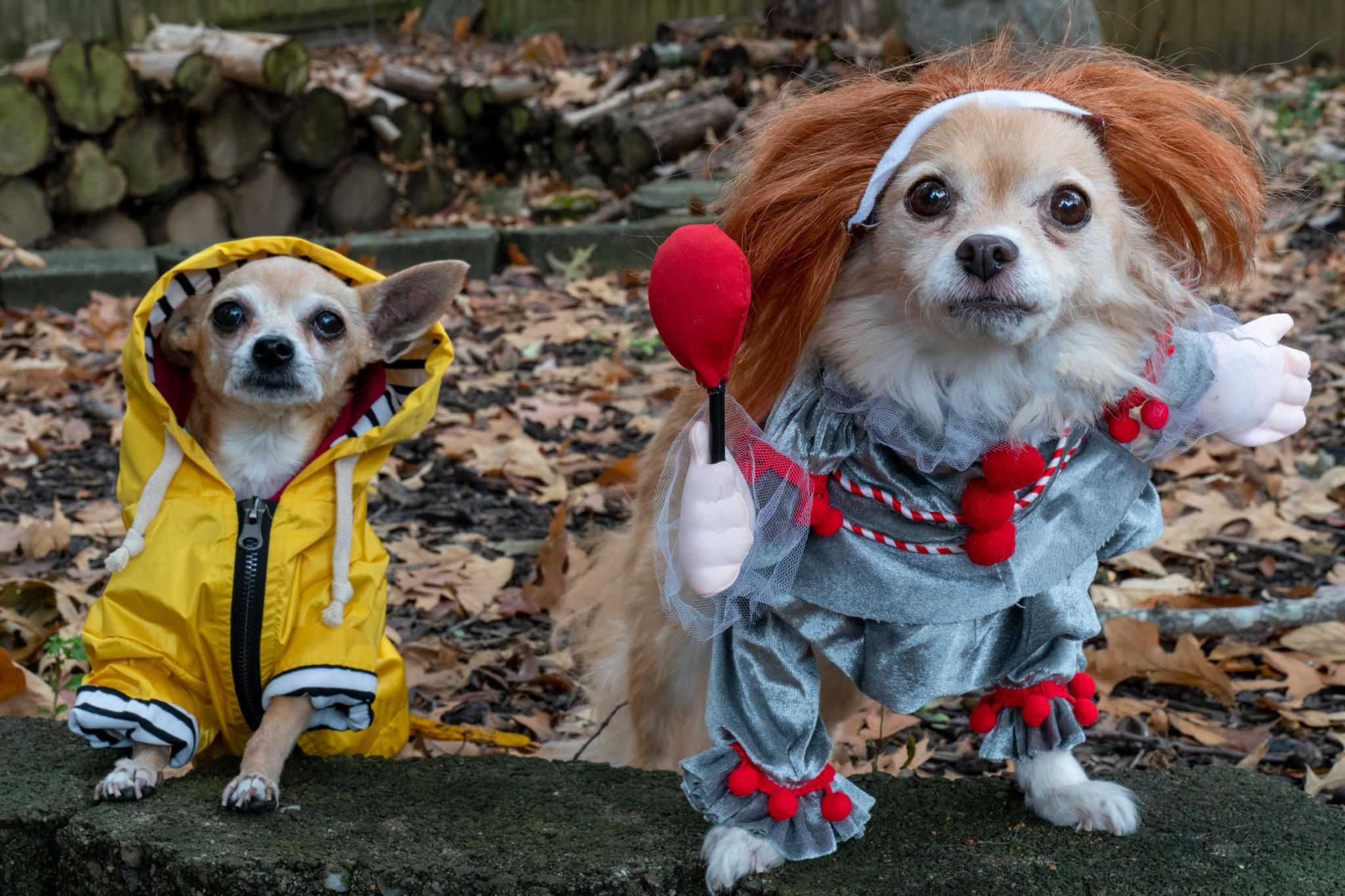
Baumann pointed out that some signs of stress might be hidden by the costume itself, like their hackles might be up or their tail might be between their legs. “Over-yawning” and “over-licking” are among the signs that your dog may not be enjoying their experience (Read more about how to recognize the signs of stress here).
Of course, all dogs are different and have different capacities for things like costumes. Some might need several weeks to create positive associations with the clothing, while others might need a couple days. Some will never feel comfortable or happy in clothes; it’s okay to skip that part of the festivities and concentrate your efforts elsewhere. As Baumann said, “It’s really going to depend on your pet. Some of our pets, they can jump right into a new situation and go up to every person in the room like they’re at home and nothing is any different for them. And other pets walk into that same room and they won’t leave your side.[…] It’s really going to be about knowing your pets and knowing how they respond to different environments and different cues.”
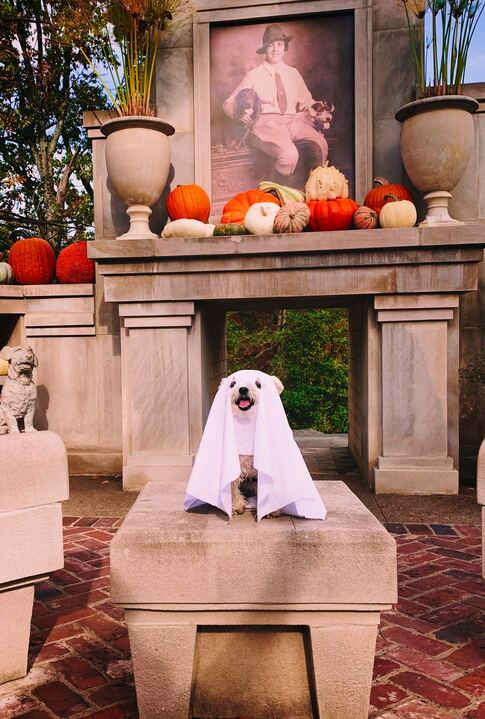
Great! They’re used to their costumes. Now what about yours?
“Sometimes people don’t realize how scary their costume might be to their pets,” Baumann said. “We need to create positive associations with that costume well before you put it on and all of the sudden look completely different to your pet. That might be very scary.”
She recommended following a similar procedure with your own costume. Leave the costume out, and let the dog sniff it, walk on it, ignore it, etc. Give them a treat when they have neutral interactions with it. Eventually, put it on (or put your kids’ costumes on them), and see how they react.
“Try to give them a positive encounter, so it’s not all of a sudden Halloween night, and there’s trick or treaters everywhere and you’re wearing something completely scary to your dog,” Baumann said. Add to Baumann’s list: spooky sound machines, fog machines, doorbells, candy that they can’t have, a general air of mayhem, and those freaky 12-foot skeletons that are lurking around more and more corners every year. Dogs have a lot to contend with on Halloween already. Minimize stress by controlling what you can for your unsuspecting dog.
Lean into the garments that your dog can already handle
Dogs do best with what they already have experience with. Some dogs are used to wearing a jacket in the winter, so if they’re not amenable to something totally new, a costume that operates exactly like a jacket would make sense for them. Some would prefer an easy costume that fits on the collar or like a collar—a bow tie or a festive bandanna, for example. Semel has seen people use a post-surgery cone, which dogs who have been spayed or neutered typically have experience with and hopefully tolerate, to make a martini costume.
On the other hand, this could also be a great opportunity to get your dog acclimated to a sweater- or jacket-like piece of clothing, if you know your dog would benefit from those things in the winter. October is an ideal time to prepare your short-haired dog for the worst of the cold, and a Halloween costume is often a great stand-in for that more everyday winter clothing.
The other reason that it’s good to start training for winter clothing in the fall is that if you notice that they’re not tolerating any clothing that goes over their arms and spine well no matter how slowly you acclimate them to it, you can enlist a trainer to help.
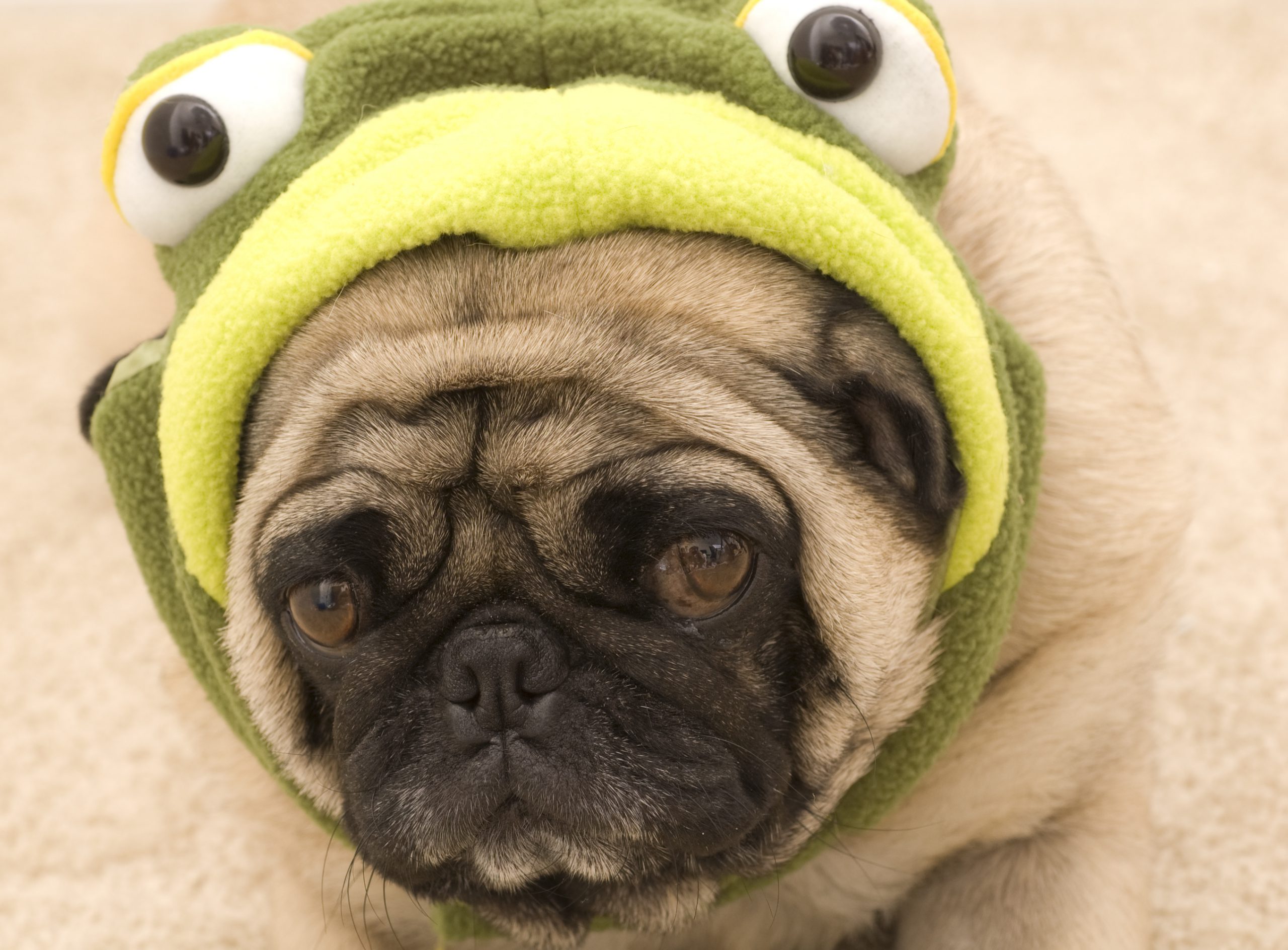
Make sure they’re comfortable
Costumes can be a tool to keep a cold dog warm, but it’s more likely that they could get hot. Another thing to check when you and your dog are testing the look is whether it’s weather-appropriate, admittedly tricky if you’re ordering early. October is often a toss up in terms of temperature in a lot of places across the US, but err on the side of not too warm.
“You don’t want a wool costume on a dog with a heavy coat if they’re going to be sitting in the house at a party,” Semel said.
Baumann adds, “If it is warm outside where you live, limit the amount of time your pet spends in the costume and make sure they have access to fresh water. Or again, consider alternatives like a festive bow tie, collar or bandana which might be cooler.”
Dogs are undeniably cute when in costumes, but an anxious, uncomfortable dog isn’t cute. Acclimate them to the clothes slowly, offer lots of treats, and back off if it’s clear the clothes give them a fright, and everyone will have a happy Halloween.
The post How to Prepare Your Dog for Their Halloween Costume appeared first on The Farmer’s Dog - Digest.
Comments
Post a Comment