In this article:
- What do I need to know about Samoyeds?
- What is a Samoyed’s personality like?
- What is the history of the Samoyed dog breed?
- How do I take care of a Samoyed?
- How much exercise does a Samoyed need?
- How should I train a Samoyed?
- How do I give a Samoyed mental enrichment?
- Do Samoyeds want to be included in family activities?
- How should I groom a Samoyed?
- What health concerns do Samoyeds have?
- What should a Samoyed eat?
This article was originally published in April of 2022, and has been updated.
When news spread that Taylor Swift and Travis Kelce had brought home a Samoyed, interest in the breed naturally skyrocketed. And if you get a look at one of these gloriously fluffy spitzes with dazzling white double coats designed to keep them warm even when it’s freezing, you might feel like rushing out to get your own. But in addition to being cute and charming, Samoyeds tend to have an active prey drive, a fierce independent streak, and vast reserves of energy that mean they require considerable attention, training, and care from their people. Adding one to your family is a big decision.
If you’re interested in taking on the challenge and becoming a Samoyed person, perhaps like your favorite pop star, read on.
Basic facts about Samoyeds
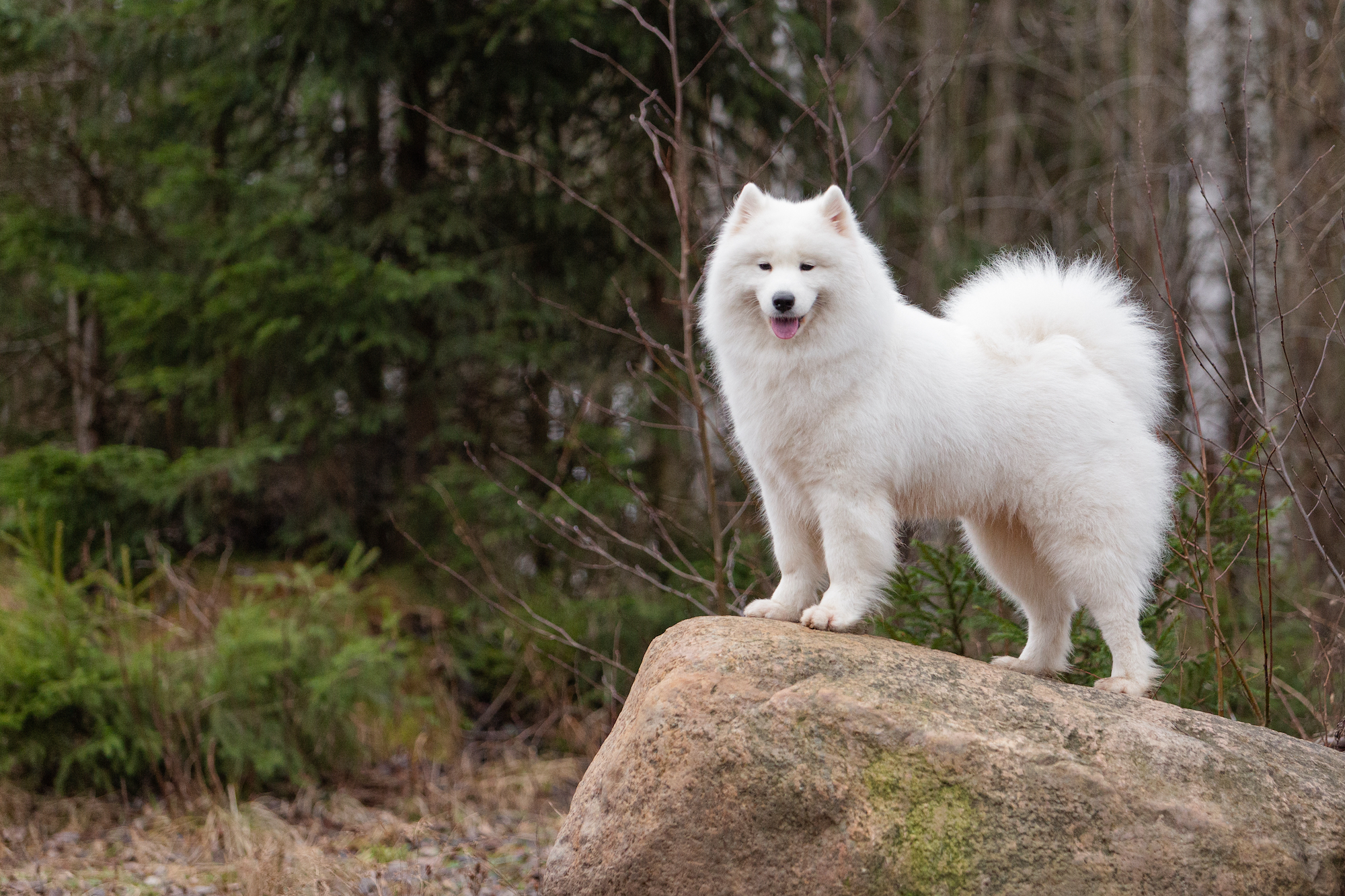
Members of the American Kennel Club’s (AKC) working group, Samoyeds are medium-sized dogs. According to the AKC, they top out at about just below 24 inches at the shoulder, and can weigh anywhere from 35 to 65 pounds when fully grown; males tend to be larger than females. And thanks to their thick coats, they tend to look bigger than they are. While most Samoyeds are pure white, there is some variation in coat color, with some Sammies appearing to be a soft cream and still others a beige-y biscuit, a color that also occasionally appears as spots on the more common white and cream coats.
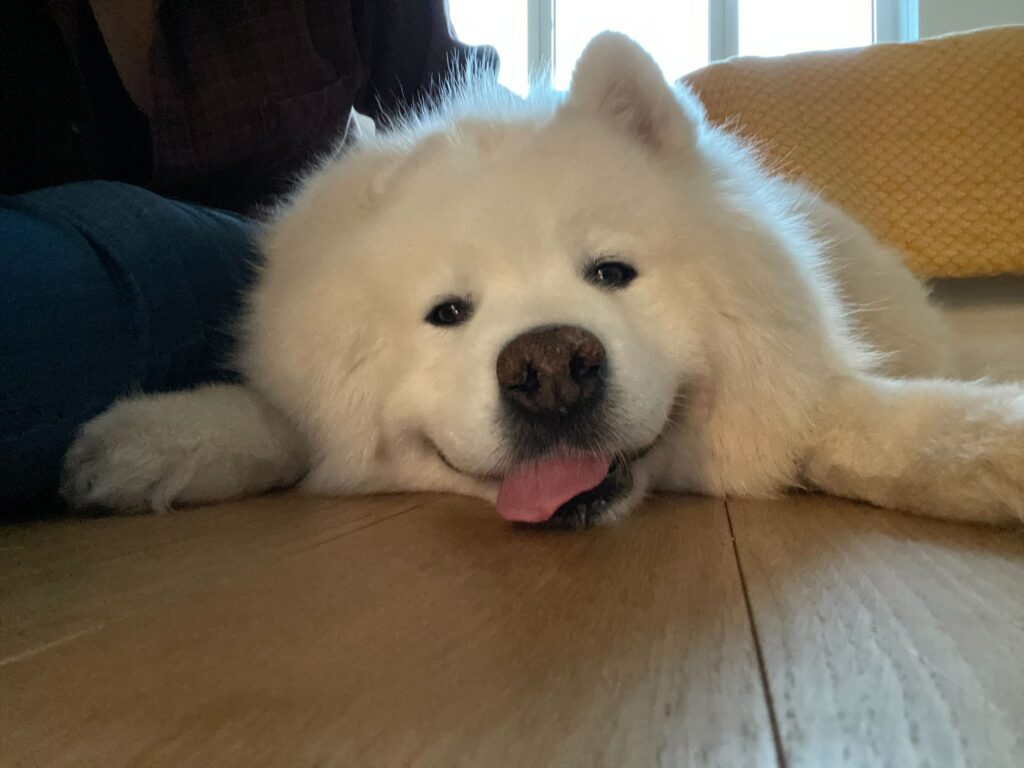
The Sammy’s anatomy reveals the breed’s Arctic heritage: their mouths are black and naturally upturned, which prevents drool (thereby preventing that drool from freezing to their faces); their ears are small, furry, and rounded to ward off frostbite; and their tails are arched over their backs, a shape which allows them to curl it along their bodies and cover their sensitive noses while they sleep, keeping them warm.
Samoyed behavior and personality
Every dog is an individual. If your Samoyed doesn’t behave the way you expect, it doesn’t mean anything is wrong with them. Having said that, Samoyed owners will tell you that they notice certain common traits in the breed.
While Samoyeds turn heads everywhere they go thanks to their fluffy white coats and signature grin, they’re not just beautiful; they’re also wonderful companions who live to be an integral part of the family unit. They should not be left on their own for long stretches of time. They are family dogs through and through, interested in the goings-on of their pack and especially taken with children. They tend to be gentle, and bring fun and levity to any family activity, always up for play or long walks. Their friendly demeanor extends to strangers, from whom they will gladly accept compliments and love.
A Samoyed’s smile is one of the first features people notice about them. The upturned mouth is a signature of the breed; some people think it makes them look like tricksters.
Samoyeds have an independent nature. They were originally bred as reindeer herders, hunters, sled pullers, guard dogs, and companions, and as such, they frequently worked on their own, unilaterally making decisions, ensuring the herd stayed together and safe from intruders.
While today’s Sammies don’t have the overwhelming herding instincts of, say, border collies or Australian shepherds, their working legacy shines through in their intelligence and independence, which often presents itself as willfulness. Be prepared to devote time to training early on and throughout your dog’s life.
Once you do invest the time in training and socialization, you’ll have a smart, sweet, and playful companion. And you never have to worry about what your Sammy is thinking: they are very vocal, not only barking to express their joy (and sometimes displeasure) but often yodeling and even trilling, almost as if they’re talking to you.
Samoyed breed history
On the Taimyr Peninsula in the northern reaches of Siberia, where the winters are perpetually dark and often as cold as -40 degrees, the Nenets kept Samoyeds to herd and protect reindeer, hunt for game, pull sleds, and even watch after children.
The Sammy is one of the oldest breeds in the world, and they didn’t leave their peninsula until the late 19th century, when Arctic explorers used them as work dogs for their often dangerous (and even deadly) explorations. Samoyeds made their way to Europe and eventually the United States in the early 20th century, where they’ve been beloved companions ever since. Despite their thick double coats, they can adjust to warmer temperatures as long as owners take care to protect them from too much heat exposure.
Caring for a Samoyed
Because Samoyeds were bred to work, they require extensive training, exercise, and mental stimulation. If you don’t teach them how to direct their mental and physical energy, they will rely on instinct, which can lead to behaviors you may find undesirable.
Exercise for a Samoyed
A Samoyed will be happiest with an active human companion. As working dogs, Samoyeds have energy and stamina to spare and require regular, vigorous physical exercise. While most dogs do well with 45–60 minutes of exercise per day, many Samoyeds do best on upwards of two hours. Most Sammies do well on long walks and hikes, and depending on the weather, they even make great cool-weather running companions, but their physical activity needs to be scaled down a lot when it’s warm out due to the risk of heatstroke. Don’t let them exert themselves for more than 15 minutes at a time when it’s over 70 degrees. You can teach them to fetch or play Frisbee. Samoyeds are great candidates for dog sports. Even if you’re not signing up for an official event, you can create a DIY agility course in your backyard.

“They are amazing with people and children, and they really become part of your family. They can be quite stubborn and willful, so training is absolutely essential, but the breed has the most special place in our hearts and we can’t imagine life without Samoyeds.”
Samoyed training
It’s essential that you start training these intelligent dogs immediately. Start with the basics, such as sit, stay, and lay down, and move on to more advanced (but extremely important) commands such as leave it. Practice every day for at least a few minutes to reinforce their listening skills—this is a dog that requires lifelong training practice.
Sammies need to work out their brains as much as their bodies, and teaching them new tricks is a great way to help them do it.
Along with teaching specific skills, training should reinforce the day-to-day relationship you want with your dog. Be kind but consistent about your rules so they know what to expect—for example, if you don’t want them to beg for food from the table, don’t give in to a demand bark “just this once.”
“Boscoe learns tricks and skills incredibly fast—he is incredibly focused and you can see his brain working as he learns. His favorite game is ‘Find the Babies,’ where we hide his stuffies all over the house and he retrieves them, one at a time, putting them away in his toy bin (for treats, of course).”
Mental enrichment for Samoyeds
All dogs need mental stimulation, but it’s hard to overstate the importance of purpose in a Samoyed’s life. Sammies are working dogs, and have been for thousands of years. They are alert and intelligent and need to use their minds in a way that feels purposeful to them. Provide your Samoyed with lots of brain-taxing puzzle toys, and use homemade nose games to keep them mentally stimulated. Samoyeds can make great therapy dogs. Given their natural inclinations, pulling exercises may also be a great energy-burner—but only if your Sammy enjoys it, has been leash-trained, and won’t turn every activity into a pulling game.
Include your Samoyed in family activities
Independent as they are, Samoyeds need to be included. They were bred to live with families—sleeping with them, playing with them, loving and being loved. As such, these are not dogs who are content to be left to their own devices for hours at a time. If you’re going to make a Sammy a member of your family, do so knowing that they want to go where you go. Crate training your Samoyed puppy is a good idea—it’ll ease potty training and will help them get used to happily spending some time on their own.
“His FOMO can be challenging, and contributes to him having difficulty settling down. We are teaching him how to ‘focus’ and ‘go settle’ when he gets too excited, and sometimes he needs to take a nap! He doesn’t want to miss out on anything fun.”
Samoyed grooming
Sammies have an extremely thick double coat of fur that requires frequent grooming. This means weekly brushing (daily during their summer coat-blowing period). They also need monthly baths, and regular grooming including nail trims. Be sure to avoid shaving their coats—doing so can damage their follicles, and there are much better ways to keep them cool, since dogs don’t sweat the same way people do.
Because of the wool-like quality of Samoyeds’ fur, it can be spun and used to make clothing. It’s another way Sammies helped their families survive in the Arctic for thousands of years. Dirt and mud don’t stick well to the coat—so even when a Samoyed gets a mud bath, when dry, the dirt tends to fall off.
Common health concerns for Samoyeds
While Samoyeds can live from 12 to 14 years if healthy, they are vulnerable to certain conditions.
Allergies: Sammies are prone to skin allergies. Common symptoms include excessive scratching, licking paws, scaly or raw skin, and diarrhea. Allergies can be caused by environmental factors (such as pollen or fleas) or food. Consult your vet about medicated shampoos, diets that help identify allergies, and next steps for treatment.
Bloat and gastric-dilatation volvulus (GDV): Samoyeds are at risk of a serious condition called gastric dilatation-volvulus (GDV). This happens when the stomach fills with gas and food—often after eating too quickly or too much—and then twists on itself, preventing proper digestion and blood flow. Signs to watch for include drooling, a swollen or firm belly, and trying to vomit without bringing anything up. If you notice any of these signs, it’s important to get your dog to a vet right away—GDV is a life-threatening emergency. Treatment usually involves emergency abdominal surgery to correct the issue and prevent it from happening again. Read our full article about GDV here.
Cancer: Samoyeds are prone to several types of cancer, including pancreatic, mammary/breast, and liver cancers.
Diabetes: Sammies are more prone to developing diabetes than many other breeds, which means they have trouble regulating their ability to metabolize sugar. Symptoms include increased thirst and appetite, increased urination, and unexplained weight loss. If your Sammy shows any of these signs, consult your vet immediately. The only treatment is regular insulin injections, though you may also be able to manage their diabetes with diet and regular dental care. Studies show that dental disease can cause insulin resistance, which can exacerbate diabetes-related health issues.
Eye problems: Samoyeds often suffer from dry eye, cataracts, and progressive retinal atrophy, among other eye problems. Signs of eye problems include scratching at the area, redness, and watering eyes. Have your vet examine their eyes if they show any of these signs.
Heat stroke: Samoyeds are at high risk for heat stroke thanks to their thick double coats. It’s absolutely essential to avoid too much heat exposure, limiting walks or other outdoor activity in any weather over 70 degrees to 15 minutes at most. Ensure they have access to water and a cool place to rest at all times.
Hip/elbow dysplasia: The Samoyed can suffer from hip and elbow dysplasia, which can lead to degenerative joint disease (DJD). While hip and elbow dysplasia are genetic joint deformities that occur while a dog is still growing, they can be exacerbated by extra weight, so it’s important to keep your Sammy at an ideal weight. Symptoms include weakness and pain in the hind legs and difficulty getting up from a sitting or lying down position.
Hereditary glomerulopathy: Samoyeds are prone to renal disease called hereditary glomerulopathy, where protein is progressively lost from the kidneys. Sufferers can end up in renal disease and failure at a young age. Signs include excessive drinking and urination, decreased appetite, weight loss, vomiting, lethargy, and weakness. Speak to your vet about keeping on top of your dog’s kidney health.
Uveodermatologic syndrome: This is an immune-mediated disease that can manifest in inflammation of the eyes, along with depigmentation of skin and fur. Speak to your vet about the condition, especially if you notice signs of sun intolerance, squinting, excessive blinking, or white spots on the nose.
Food for your Samoyed
As with any breed of dog, it’s important to feed Samoyeds healthy, complete and balanced food on a regular schedule. Here are some other important considerations:
Support joint health: A fresh diet that provides balanced omega-3 fatty acids may help keep joints healthy. A pre-portioned fresh food plan also makes it easy to feed the right number of calories every day. This helps maintain a healthy weight, which is another key factor in keeping joints healthy—as well as improving general health and quality of life.
Support healthy aging: Fresh food from The Farmer’s Dog has been clinically shown to support healthy aging at a cellular level.
Limit treats and snacks: Treats and snacks should make up no more than 10% of your dog’s daily calorie intake—and this goes for very active dogs as well. They make great training rewards, but don’t go overboard on the quantity. When you sign up for a fresh-food plan from The Farmer’s Dog you can also add healthy, human-grade treats that are also portioned for your dog.
A healthy diet is the best way to support your Sammy’s health and happiness—along with plenty of love, adventure, and play. If you’re thinking of getting a Samoyed, consider contacting a local rescue to find one in need of a good home.
The post The Samoyed Care Guide appeared first on The Farmer’s Dog - Digest.
Comments
Post a Comment