In this article:
- Why are researchers studying how chronic pain impacts dogs’ cognition and emotions?
- Who is funding this research?
- Why are these researchers studying dogs instead of mice?
- How are the researchers testing dogs’ cognition?
- How are the researchers testing dogs’ emotions?
- How will this research help dogs in the long run?
Humans can’t always tell when our dogs are in pain. Our pets can’t use words to tell us how they’re feeling, so we often only notice something is wrong when we hear them yelp or see them limp.
But our best friends may be in discomfort even before these signs show up—showing subtler indications that we don’t always recognize. If you’ve muscled through a day with a sprained ankle, stomachache, or worse, you know that pain can affect thoughts, mood, and behavior.
As important as these effects of pain are, veterinarians don’t have a standardized exam for measuring them. “For many years, clients would tell us, ‘My dog just seems really sad. He just doesn’t seem like himself,’” said Margaret Gruen, DVM, PhD, Diplomate of the American College of Veterinary Behaviorists, a professor of behavioral medicine at North Carolina State University’s College of Veterinary Medicine. “But we had no way to really capture that.”
Here’s how Dr. Gruen and other experts aim to change that, and why their work matters to dogs and humans alike.
Why are researchers studying how chronic pain impacts dogs’ cognition and emotions?
Vets have historically relied on visual assessments, physical exams, owner questionnaires, and pain-scoring systems to discern a dog’s pain levels. While they consider and account for qualitative factors like demeanor, they lack a standardized test for pain’s cognitive or emotional impacts.
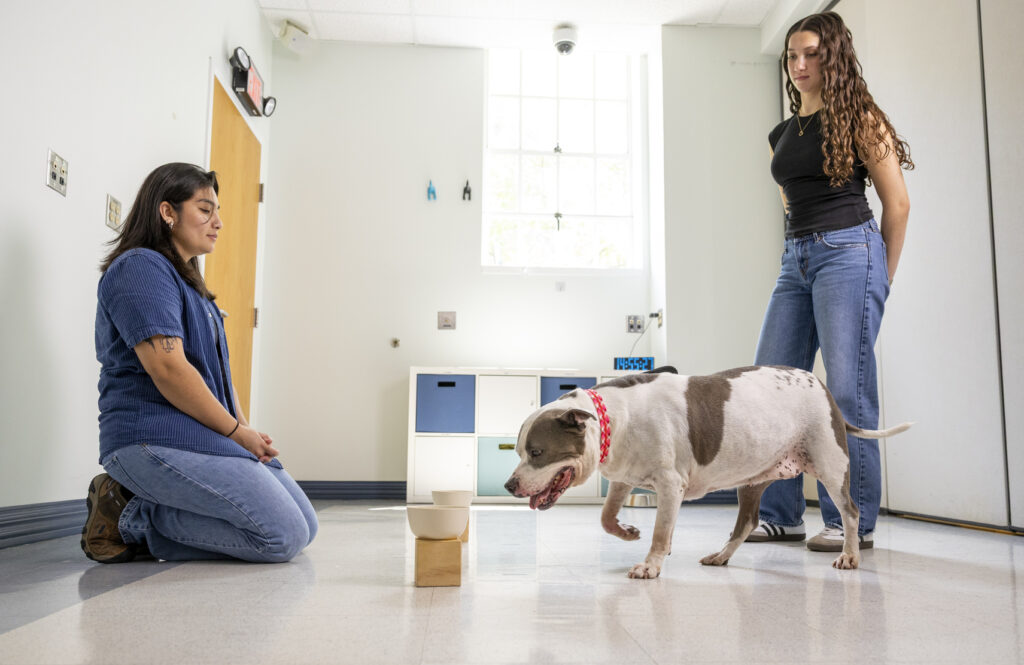
Dr. Gruen is leading a team of researchers from Duke University and NC State on a five-year study to examine cognition and emotions in pet dogs with chronic pain. Their work aims to deepen our understanding of how dogs experience and express pain, and in the process create a more complex model for human pain.
“[Dogs] really nicely represent what happens with the chronic pain experience in people,” said Dr. Gruen. “They have pain that affects their mobility, but our clinical impressions from owners are that it also affects their social engagement, interactions, and cognitive functioning.” She and her team are working to demonstrate that a dog’s pain affects not only how they move, but also how they behave, socialize, and think.
In this study’s first phase, 45 dogs are participating in a battery of tests evaluating their emotions and cognition. NC State is assessing emotion while Duke University—home to the Canine Cognition Center—evaluates cognition. Testing began in January 2025 and will end in October of this year. Of these dogs, 22 have osteoarthritis, a degenerative joint disease characterized by thinning cartilage between bones, and 23 are healthy.
Since these dogs are experiencing pain due to osteoarthritis, they’re natural study subjects. To participate, they must not be taking pain medication. (“People can withdraw at any time if they or their veterinarian feel like their dog needs to start pain medication,” Dr. Gruen said. “We would never withhold that.”)
Dr. Gruen said that she is focusing on osteoarthritis because it’s the most common chronic pain condition in dogs, with about 40% showing clinical signs. Incidence increases with age: An estimated 80% of dogs above age 8 have the condition.
This prevalence means that many dogs are living with chronic pain. Yet owners may not be aware of their dogs’ pain if they’re not attuned to their cues. “Sometimes as humans we’re not the best at reading them,” said Vanessa Woods, director of the Duke Puppy Kindergarten and one of the study’s collaborators. “They can be quite uncomfortable before we realize it.”
The researchers hope better understanding can lead to better pain relief for dogs and humans. “These findings could inform the development of new drug and non-drug interventions to relieve chronic pain,” said Francis Keefe, PhD, Professor Emeritus of psychiatry and behavioral sciences at the Duke University School of Medicine and a co-investigator of this study.
Who is funding this research?
This study is funded by a $5.5 million grant from the Helping to End Addiction Long-term (HEAL) Initiative. Established in 2018, this congressionally funded program at the National Institutes of Health (NIH) is developing science-backed strategies to address the nation’s opioid crisis, including through improved pain management.
“The most consistent and interesting question in the field of chronic pain is: Why do some individuals seem to be overwhelmed by the experience of pain … while others seem to cope much more effectively?” said Dr. Keefe. Factors like sex and age don’t explain the vast differences in pain experience and management, so researchers must look at other markers to understand pain’s effects.
“A growing body of evidence suggests that pain-related behavioral, cognitive, and emotional responses can provide insight into the nature of these variations in individual response to chronic pain,” he said. Dr. Gruen’s study examines these responses to chronic pain that aren’t always obvious, benefiting humans and dogs in the process.
Why are these researchers studying dogs instead of mice?
Dr. Gruen received this grant because her research departs from rodents as the standard model for studying human pain. Rodents have served as the go-to laboratory model for human pain since the 1800s because of their analogous nervous system and shared genetic makeup with humans.
While lab rodents have expanded our understanding of pain, the picture they provide is incomplete. This patchy understanding has led to drug development based on rodent models that didn’t translate to humans.
In addition to a comparable nervous system and genetic overlap, dogs share an environment and strong social bonds with humans—adding dimensions for studying pain that mice and rats lack.
“We have for many years felt that dogs are a really good non-rodent model, because it not only helps people potentially, but helps the dogs,” Dr. Gruen said. If humans can learn to read these subtler behavioral signs of pain in their dogs, they may seek care even before more obvious signs appear.
How are the researchers testing dogs’ cognition?
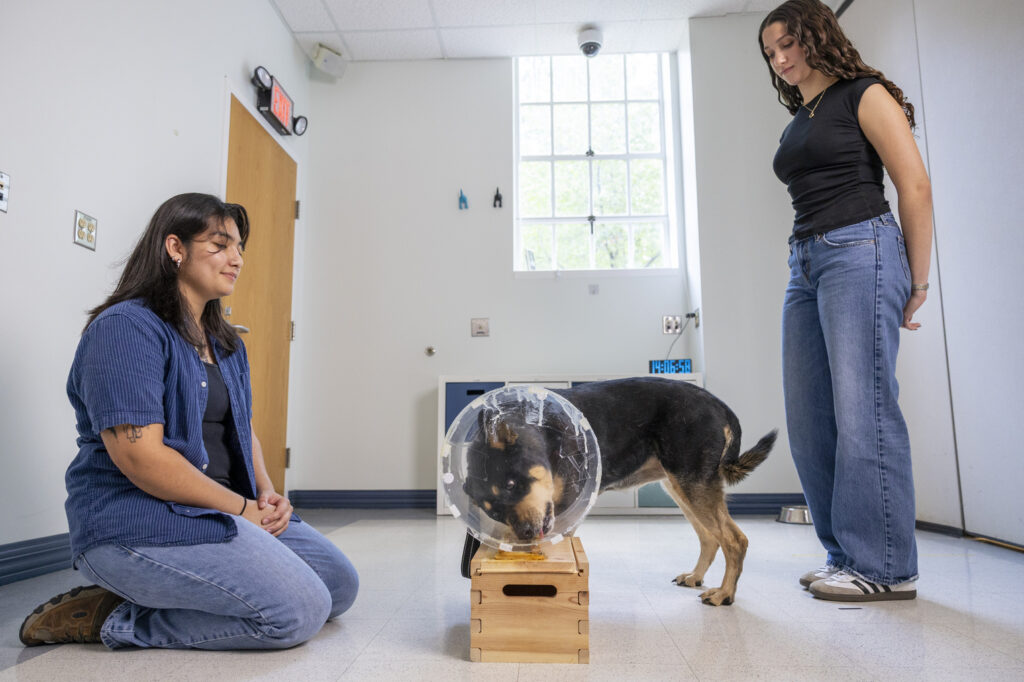
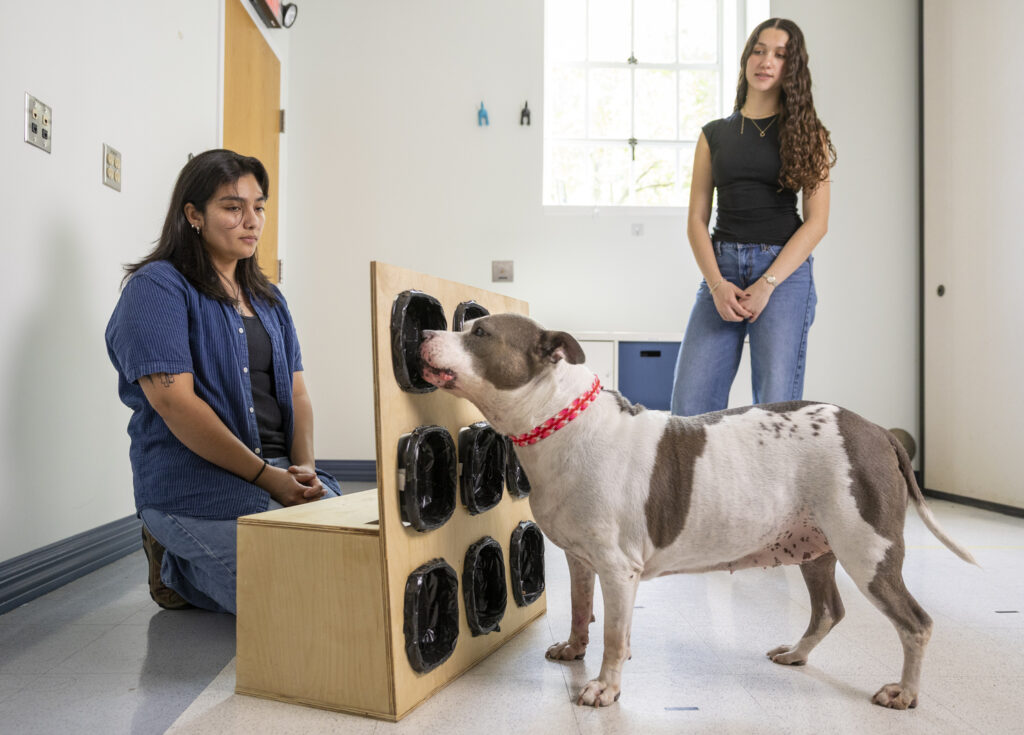
At Duke, Woods is coordinating the tests assessing cognitive markers for pain. These tasks test dogs’ self-control, memory, communication, and problem-solving skills. In each test, Woods and her team are looking out for how dogs with and without osteoarthritis tackle these tasks, searching for differences that they can attribute to the presence or absence of chronic pain.
“We know that in humans, if you’re in chronic pain your memory, self-control, and social relationships are impacted,” she said. Their goal with this batch of tests is to assess cognitive ability in dogs with and without osteoarthritis to “figure out what kind of cognitive profile would match a dog in pain.” Her team hypothesizes that “dogs with osteoarthritis might have less self control, rely less on their memories, and perhaps make less eye contact, although this is more exploratory.”
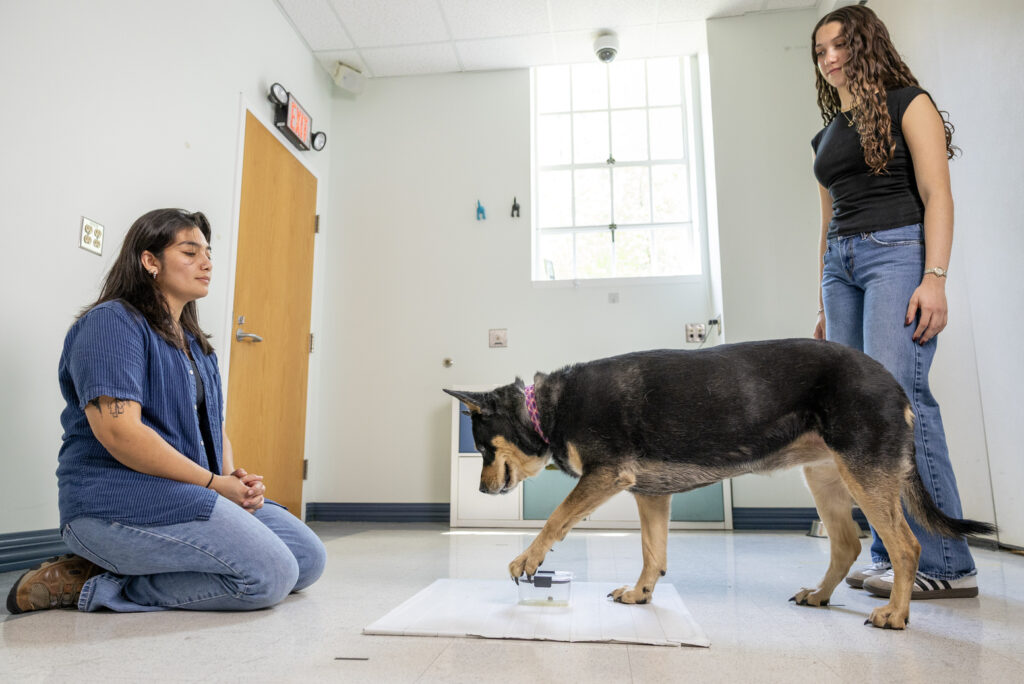
For example, the “Impossible Task” involves putting food in an unlatched container in front of a dog, showing them how to retrieve it. Then, the researcher will latch the container so the dog can no longer open it. Faced with this challenge, the dog may try many different tactics, or make lots of eye contact to ask for help. According to Woods’ hypothesis, dogs in pain may make less eye contact, interfering with their ability to rely on social bonds for help.
Another activity called “Spatial Discounting” tests how much work dogs are willing to do for food. The dogs can pursue a food reward that gets moved farther and farther away, getting bigger every time, or choose a smaller reward closer to them. “We predict that dogs who have osteoarthritis won’t be willing to go as far,” Woods said.
How are the researchers testing dogs’ emotions?
Dr. Gruen said that owners whose dogs are in pain often report that their pets “just don’t seem as excited about some of the things that they used to find pleasure in” or no longer greet their people at the door. To understand these behaviors, she and her team are analyzing videos from participants’ homes to see these dogs’ emotional responses in their typical environments.
In one test similar to Spatial Discounting, a food-delivery device sits on one side of a room and the dog’s owner on the other. Every 10 seconds, either the owner calls their dog or the device makes a noise and delivers some food. The researchers track how many times over a three-minute period the dog will walk back and forth to receive these rewards; then, over a 10-minute period, they can walk freely to their human or the device, receiving a reward once they arrive at either—or can stay put in the center of the room instead. “What we’re interested in is whether there’s a difference in how much the healthy dogs seek those rewards versus the dogs who have chronic pain who maybe don’t want to walk across the room,” Dr. Gruen said.
The next phase, which Dr. Gruen said would launch around late February or early March 2027, will involve even more dogs, randomized into two groups: one given pain medication, one not. They will complete a similar battery of tests, with the researchers looking to see whether pain treatment improves performance. As in the previous phase, no dog will be denied pain medication if their owner decides they need it; participation is voluntary and the researchers prioritize each dog’s well-being.
How will this research help dogs in the long run?
Long after the study’s conclusion, these tests could become another tool in assessing a dog’s fitness. “This battery [of tests] could be used in basic research studies with dogs and ultimately in the practice of veterinarians,” said Dr. Keefe.
Woods sees a place for the tests in a veterinary setting, helping dog owners spot chronic pain ahead of obvious signs. “Even before people are aware of it, they can play these games with their dogs or at their vet and say, ‘This dog’s memory is not where we think it should be—these constellations of cognitive abilities are not where we would expect for a dog who is pain-free,’” she said. “And of course, the earlier you’re aware, the better the outcomes are.”
This research is yet another reminder to pay close attention to your dog’s typical disposition. A persistent shift in behavior may point to a condition that requires veterinary care. “If [owners] notice a change in their dog’s social interactions or enjoyment, that’s a reason to go and get them checked out,” Dr. Gruen said.
The post How Does Chronic Pain Impact Dogs’ Cognition and Emotions? appeared first on The Farmer’s Dog - Digest.
Comments
Post a Comment