In this article:
- Are dog pee and poop good fertilizer?
- Can dog pee and poop hurt the environment?
- What’s the best way to clean up after my dog?
- Can dog poop wash into waterways?
- What diseases can people and dogs catch from dog poop?
- Can you compost dog poop?
When John Allen and his family moved to Helsinki, Finland from the United States, his wife noticed that the local parks smelled pungently of dog pee. The scientist and attentive husband soon found himself researching the way dogs’ pee can impact the environment. Previously an environmental inspector working with stormwater in Richmond, Virginia, he was prepared for the assignment.
Now pursuing a PhD in urban ecosystem ecology at the University of Helsinki, Allen is studying the ways dog pee can affect and even harm cityscapes.
And it’s not only #1—#2 can also do quite a number on the environment. When you don’t pick up your dog’s poop, or you let them pee where they shouldn’t, that can spread disease, kill plants, and even cause light poles to fall over. So when Allen is out and about with Peppi, his family’s beloved 5-year-old Yorkshire terrier mix, he does the right thing. “When we take Peppi for walks, we always carry poop bags with us to pick up her tiny little poops,” he said. “Then we throw them away in one of the path-side trash bins. Standard, responsible dog-owner stuff!”
Here’s why picking up your dog’s waste—or, in the case of pee, washing it away—is so vital.
Why dog waste is not good fertilizer
Dog pee and poop are organic materials, but that doesn’t mean they decompose without issue—and they certainly don’t fertilize soil. Unlike other animals who use the great outdoors as their bathroom, dogs eat food that’s imported, meaning it comes from outside that environment; so, when dogs poop or pee, they’re adding concentrated compounds that weren’t there to begin with.
Dog pee contains urea, which is rich in the element nitrogen. Nitrogen can, in the proper form and the right amounts, feed plants. (It’s a key ingredient in synthetic fertilizers.) But that doesn’t mean dog pee is good for watering your perennials—in fact, too much nitrogen can be toxic to plants.
Dog poop is rich in the element phosphorus, which is another common ingredient in fertilizers. But it also carries pathogens like salmonella, E. coli, giardia, and hookworm, with a single gram boasting up to 23 million bacteria. These microorganisms can sicken both dogs and humans.
And the elements in dog pee and poop accumulate wherever they’re not cleaned up. The Enviro Pet Waste Network, a nonprofit organization that educates dog and cat owners on how to reduce their pets’ environmental impact, estimates that dogs in the US generate about 6.5 million tons of waste every year—that’s a load of phosphorus and nitrogen going into the environment.
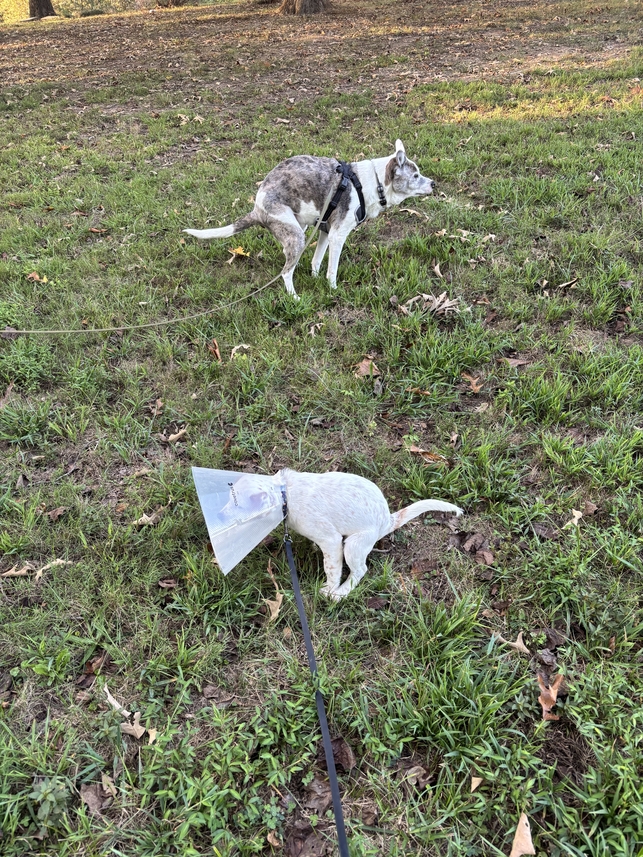
How dog pee and poop can harm the environment
When left on the grass or sidewalk, dog waste can make quite an impact on its surroundings.
It “scalds” grass.
If dogs pee in your yard, over time you may see straw-colored patches of dead grass where they’ve relieved themselves.
Dog pee is “a massive shot of nitrogen into a very, very small area,” Allen said. The highly concentrated chemical appears to scald the grass when really it’s overloading that patch with excess nutrients, killing it.
One way to counter dog pee’s effects on grass is by immediately diluting the urine with water. “Pouring [water] onto the urine dilutes [and] spreads it out,” Allen said. “I do wish more people did that.”
Dilution helps reduce the high concentration of nitrogenous urea; microorganisms living in dirt can more easily break down urea at lower concentrations. A squirt of water also helps the urine seep into the soil, where even more microbes dwell, rather than pool on the surface. Allen suggested adding twice the amount of water to pee; this strategy can help keep your lawn and backyard greener.
It corrodes infrastructure.
Letting your dog pee on a lamppost may seem innocuous, but it can have dangerous consequences. Believe it or not, over time, dog urine can corrode lampposts enough that they fall down.
In 2015 in San Francisco, a lamppost fell on a car, narrowly missing the driver. A month later in downtown San Diego, another light toppled. In 2019, a light pole fell into a busy street in Chicago. Two cities in Japan also saw such incidents in 2016 (in which the falling lamp crushed a girl’s hand) and 2021. In all these cases, city officials or investigators found evidence that dog pee had corroded the lampposts’ bases.
And peeing on lampposts presents a risk to dogs, as well—in some tragic cases, dogs have been electrocuted due to stray voltage.
It keeps plants from absorbing water.
Allen found in his study that dog pee increases the soil’s electrical conductivity. This means there are more electrically charged atoms called free ions, whose presence makes it “impossible for plants to absorb water from the soil, so they dehydrate and die,” he said. Ergo, it’s best if your dog doesn’t pee directly on the patch of soil plants and flowers grow from.
It spreads bacteria into the air.
A 2011 study found that dog feces are “likely the dominant source of aerosolized bacteria” during winter in Cleveland and Detroit. That’s right—when you don’t pick up dog poop, it can end up sending bacteria into the air. The paper noted that these bacteria can cause allergic asthma and seasonal allergies.
It suffocates aquatic ecosystems.
If left on the street or sidewalk, poop eventually gets washed away during a rainstorm—likewise for pee. Both can end up in a stormwater drain where they won’t be treated or filtered; and if there’s a big storm that causes those combined sewer overflows to, well, overflow, that dog waste will be “directly deposited into the local waterways,” said ecologist Krista McGuire, PhD, who has studied the effects of canine urine on microorganisms in urban soil. When poop washes into waters used for recreation, swimmers get exposed to the pathogens it contains.
And while excess nitrogen and phosphorus are toxic to plants, they feed other organisms like green algae. These elements can spur algal blooms, or massive growths of algae in water that disrupt aquatic life.
“The algae eats the nitrogen, photosynthesizes, [and] produces oxygen—but then it dies,” Allen said. The decomposing algae then consumes the water’s supply of oxygen, so the water can no longer sustain creatures that require it, like fish.
It acidifies soil.
Urine changes soil’s pH, or acidity level. Any environment’s pH level can impact its local community of microorganisms, known as the microbiome.
Depending on the environment, healthy soil sits between 6.2 and 6.8 on the pH scale, which is just below neutral—but urine acidifies it. (While nitrogen-rich dog pee can acidify soil, the urine itself is not highly acidic.)
Allen said that in a busy urban park with lots of dogs, “the pH takes a nosedive.” He’s seen values below 3 in the soil, which is “fairly acidic,” he added. While acidic soil isn’t necessarily a bad thing—some plants love it—this alteration can have ripple effects, changing the population of bacteria, fungi, and plants that also live in the soil.
It kills the vibe.
Most obviously, dog pee and poop spoil our surroundings—offending sight, smell, and, if you’re having a really bad day, touch.
In New York City, following a winter where dog waste complaints spiked, City Council members have introduced the Safe and Clean Outdoor Ownership Practices (SCOOP) Act, which would aim to improve neighborhood cleanliness by providing dog waste bags around the city and signage encouraging people to pick up after their dogs. Allen has seen the pitfalls of poop left unattended in the snow in Helsinki. “Waste builds up for the entire winter and then thaws in the spring,” he said. “You’ve got four or five months’ worth of poop buildup.” (Ick.)
Unsightly piles of poop and acrid-smelling pee make parks and sidewalks gross at the very least, and dangerous—especially to coprophagists (the science-y word for dogs who eat poop)—at worst.
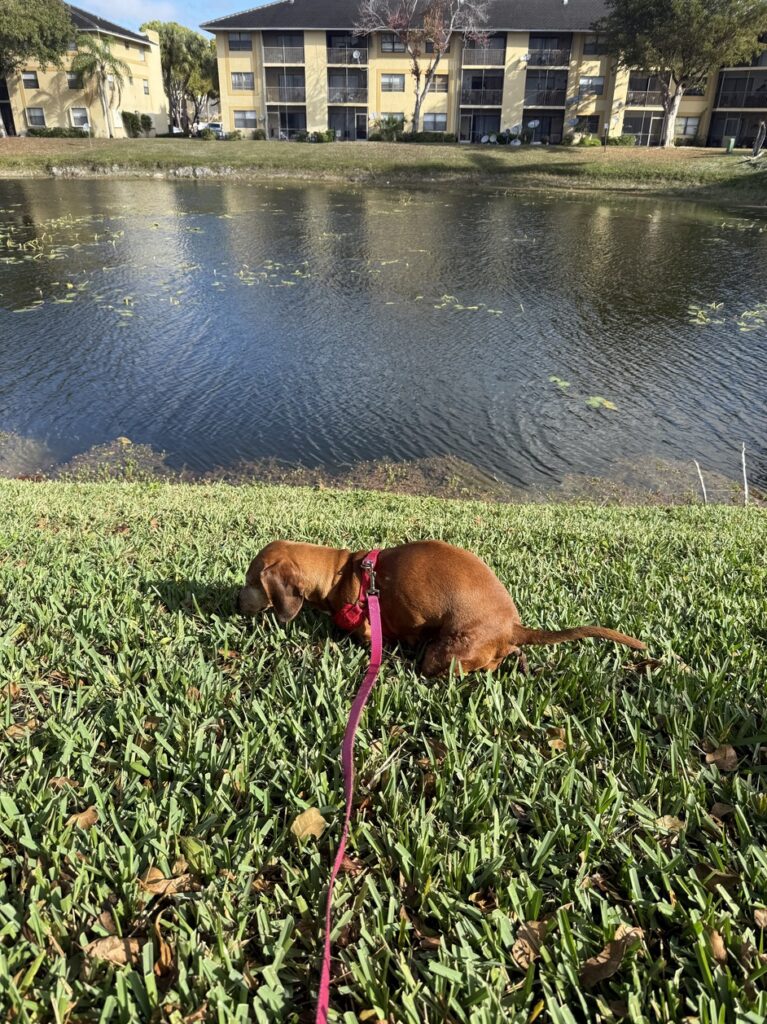
Rules for cleaning up dog pee and poop
All this science can inform the etiquette we practice as responsible, considerate dog owners. The basic rule is that we get to enjoy dogs, and it’s our job to clean up their messes. Here’s some guidance to live by:
1. Pick up and throw out dog poop—every time.
Carry several disposable bags on every walk. Scoop up everything, and hold onto the bag until you can safely trash it. (Many municipalities also allow you to flush unbagged dog poop down the toilet as long as you’re connected to a sewer system. Check with your local authorities to make sure.)
2. Don’t throw dog poop in your neighbor’s trash (without permission).
Be considerate—not everyone is cool with another animal’s poop in their garbage.
3. If you can, encourage your dog to pee on grass or soil—and then dilute with water.
Peeing on the sidewalk or street guarantees urine will end up in a storm drain and eventually wash into a body of water; peeing on grass and flowers can kill them over time; and peeing on soil will deplete its healthy microbes. Allen said the best option is to let your dog pee on grass or dirt, and then immediately dilute it with twice as much water.
4. Don’t let your dog pee in storm drains.
Per Allen, “that’s just going straight out to the nearest water body as soon as there’s any rain.” The nitrogen can feed algae blooms that harm the local ecosystem.

5. Don’t let your dog pee on lampposts.
It’s better to let your dog relieve themselves on the classic fire hydrant—which is often made of slower-corroding cast iron—or another stout object that is not prone to degradation or toppling. This may be difficult, as dogs instinctively lift their legs or squat to mark their territory, especially on a popular post where all the other dogs are peeing.
6. Don’t let your dog pee on plants and flowers.
Do your best to keep them from peeing on plant life. Dog urine increases the soil’s electrical conductivity such that the plants aren’t able to absorb water, so they dehydrate and die.
Picking up dog poop is the right thing to do; it keeps parks and neighborhoods clean, and is a way of caring for our local ecosystems. It’s also easy to do. Just bring a scoop or a bag, and ask your neighbor if you forgot. Being a responsible dog owner means dealing with your dog’s mess, too, as Allen and Peppi show us. It makes the world better for all the humans and dogs who share it.
When Allen pitched his doctoral research to his supervisors, they “had a good laugh about it, and then they stopped and thought: Huh. That is a lot of nitrogen going into the environment. Has anybody looked at that?”
Frequently asked questions about dog-waste etiquette
Is dog poop bad for the environment?
Yes, if you don’t clean it up, dog poop can negatively impact the environment. It’s rich in phosphorus, which in high doses can be toxic to plants. It also adds foreign compounds to an ecosystem, because a dog’s diet is imported and made from ingredients that did not originate from that ecosystem. Just because poop is an organic material does not mean it’s good for nature.
Can dog poop wash into waterways?
Yes, poop that isn’t picked up can wash into bodies of water during a rain storm. Dog poop can carry organisms that are harmful to dogs and humans like E. coli, salmonella, roundworm, and giardia, and can end up in water meant for public recreation.
What diseases can people and dogs catch from dog poop?
Dog poop can carry bacteria harmful to dogs and humans, including E. coli, salmonella, and parasites like hookworm and roundworm.
What’s the right way to dispose of dog waste?
Pick up dog poop with a disposable bag and throw it in the garbage. You can also dilute dog urine on the spot with water.
Can you compost dog poop?
Dog poop is compostable in some cases, but you must keep a separate bin or pile for it. And make sure that your local authorities allow it. In New York City, for example, you can’t compost dog poop.
Kenzie Bryant interviewed Dr. Krista McGuire for this story.
The post Why Science Says to Clean Up After Your Dog appeared first on The Farmer’s Dog - Digest.
Comments
Post a Comment