In this article:
- What does it mean if my dog is slowing down?
- What does it mean if my dog has more accidents around the house?
- What are signs of cognitive decline in a dog?
- What does it mean if my dog is getting antsy at night?
- What does it mean if my dog’s breath is smelly?
- What does it mean if my dog’s eyes look milky?
- What does it mean if my dog’s fur is getting thin, patchy, or brittle?
- Why is my dog constipated?
- What are signs that my dog’s senses are getting worse?
- What does it mean if my dog is becoming less affectionate?
- How can I help my dog age more comfortably?
We all notice them eventually: the small, subtle signs that our dog is getting older. Maybe their muzzle is starting to gray, or they’re slowing down during evening walks. Their eyes get a little softer, their hips a little stiffer, and their hearing a little less reliable.
As the changes add up, it’s natural to wonder whether your dog has officially entered the “senior dog” stage of life—and what you can do to make their golden years as bright as possible. If this sounds familiar, here are some diet and lifestyle recommendations from veterinarians to keep your dog’s tail wagging for years to come.
Different dogs age at different rates, which is why the American Animal Hospital Association does not specify age benchmarks for senior status. “A terrier is probably not senior at 10,” Katherine Houpt, VMD, PhD, and Professor Emeritus at Cornell University, told us, “whereas a Great Dane would be very senior.” In the absence of hard-and-fast numbers, it’s up to us to watch for subtle signs and work proactively to help our dogs age comfortably.
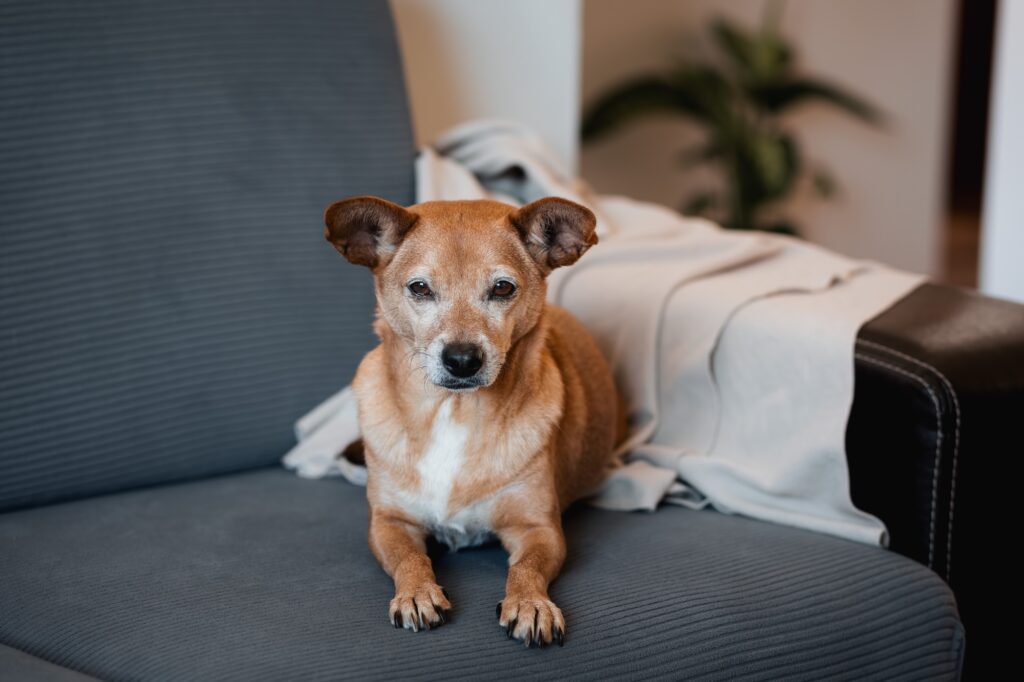
Signs your dog is aging
If your dog has reached their advanced years, there will likely be plenty of signs. The following are some of the most common.
They’re slowing down
Many dogs become more reluctant to get up and down as they age. They might also have a harder time on slippery surfaces, move at a slower pace during walks, or want to be out for less time than in the past.
Many dog owners don’t realize that all of these behaviors can be signs of chronic pain. If you notice your dog’s mobility seems to be changing, Jonathan Block, DVM, CVA, CCRT, and founding veterinarian and CEO of West Delray Veterinary and Mindful Veterinary Care, suggests a trip to the vet. “Even though the dogs are not screaming or vocalizing in discomfort, those subtle signs are actually signs of discomfort,” Dr. Block said. Your vet can help you identify any underlying causes, like soft tissue injuries or arthritis, and recommend appropriate treatment. Depending on your dog’s specific mobility struggles, you might consider adding rugs throughout your home to provide traction, or ramps to help them onto the couch and other surfaces that are now difficult to reach. If arthritis is causing your dog discomfort, you may also want to talk to your veterinarian about whether medication could help them.
They’re more “accident”-prone
“Some dogs forget to be housebroken” as they age, according to Dr. Houpt, and that’s often a “game-changer” for their owners. If your dog begins urinating or defecating in the house, talk to your vet to rule out medical problems like kidney issues. Excluding a medical problem, your dog is likely dealing with cognitive dysfunction. Either way, your vet can provide recommendations.
They’re not as sharp as they once were
Signs of cognitive decline can vary. Some dogs become less social, some wander around, and some spend hours sitting in a corner doing nothing. That’s why it’s important to know your dog’s usual patterns. “If your dog never left the yard and now at 8:15 goes outside of his usual boundaries, that’s a sign,” Dr. Houpt said.
Depending on how extreme the changes are, they could be a sign of cognitive dysfunction syndrome (CDS). This also goes by the name canine cognitive dysfunction (CCD). Generally, vets use the acronym DISHAA to evaluate dogs’ mental sharpness and possible cognitive dysfunction: disorientation; impaired social interactions; sleep disturbances; house soiling, learning, and memory deficits; activity changes; and anxiety and fear.
If any of this sounds like your dog, talk to your vet about how you can help them feel more secure. According to Cornell University, there is no specific cure for CDS, but treatment plans can include specialized diets, mental enrichment, medications, and supplements.
They’re antsy at night
Many dog owners worry when their dogs begin sleeping more, Dr. Block said, but that can be a normal byproduct of age: “Even young, healthy dogs can sleep a majority of the time.”
But just like humans with Alzheimer’s can become agitated at night, dogs dealing with certain cognitive issues can also become anxious and restless at later hours. “They are no longer responding to light/dark cues, or what’s happening [in the environment],” Dr. Houpt said, and this can be stressful for their owners, who struggle to sleep. If your dog’s bedtime behavior is beginning to cause concern, it’s worth speaking with a veterinarian.
Their breath is smelly
As much as vets try to emphasize dental health, dog owners sometimes let it fall by the wayside. This can cause trouble for dogs as they age. When left untreated, dental disease can damage the heart, kidneys, and potentially liver.
The benefits of dental treatment can sometimes be surprising. “It’s not uncommon when we do dentistry on patients with severe dental disease that they actually perk up afterwards,” Dr. Block said. “People think that their dogs are just slowing down, and they don’t realize that they actually don’t feel well because they have really bad, festering infection or dental pain.” Routine care, including daily toothbrushing and regular dental exams, can make a big difference in your dog’s overall health. It’s best if you start when they’re young, but if you haven’t started yet it’s not too late for them to benefit.
Their eyes look milky
If your dog’s peepers are suddenly looking a little more opaque than they once did, that doesn’t necessarily mean they have cataracts. If they look cloudy from a certain angle, it might be “nuclear sclerosis,” also known as “lenticular sclerosis”—a normal, age-related change that usually doesn’t cause complete blindness. Regardless, Dr. Block suggests having your dog’s eyes examined to rule out cataracts, some of which can be addressed with surgery.
Unless your dog has cataracts, Dr. Houpt said, vision loss is “relatively unusual.” Still, if you suspect your dog’s eyesight is compromised, she has a simple suggestion: “Rearrange the furniture to see if the dog bumps into that footstool that used to be to the left and is now to the right.” If you find out that your dog does have vision loss, keeping your furnishings in the same place at all times can help them stay oriented in your home.
Their fur is changing
Changes in your dog’s coat thickness, texture, and color can be a normal sign of aging, according to Dr. Block. At the same time, he adds, “The appearance of the skin and the coat is often an indicator of the overall health of the patient.” If your dog’s fur is getting thin, patchy, or brittle, check with your vet to rule out certain hormonal conditions, like diseases of the adrenal glands or thyroid.
They get constipated
You know that age-old stereotype about elderly people eating prunes? Older dogs also sometimes have trouble getting things moving, so Dr. Block suggests making sure your dog is getting enough dietary fiber. “We’re starting to see the internists and the people who manage complicated GI diseases put dogs on fiber for its health impacts,” he said. And stool quality “really is just a peek into the window of gastrointestinal health.”
They’re less responsive
To a degree, Dr. Block said, we can perhaps attribute older dogs’ selective hearing to “the idiosyncrasies of old creatures.” Still, he said, “it’s probably also some level of hearing loss.”
A broader lack of interest in the environment can also be a sign that your dog’s cognition and sensory acuity are not what they used to be. If they used to spend 10 minutes sniffing their surroundings every time they got out of the car and now just stand there or lie down instead, Dr. Houpt said, “that indicates that something has changed.”
They’re less touchy-feely
Even the snuggliest dog can become more withdrawn with age—especially if they’re not feeling their best. “If they no longer want to be touched,” Dr. Block said, “that can indicate pain.” This can extend beyond cuddle time as well. “Sometimes if they’re not feeling well or they’re having trouble getting up, they’re not going to come and greet you at the door anymore.”
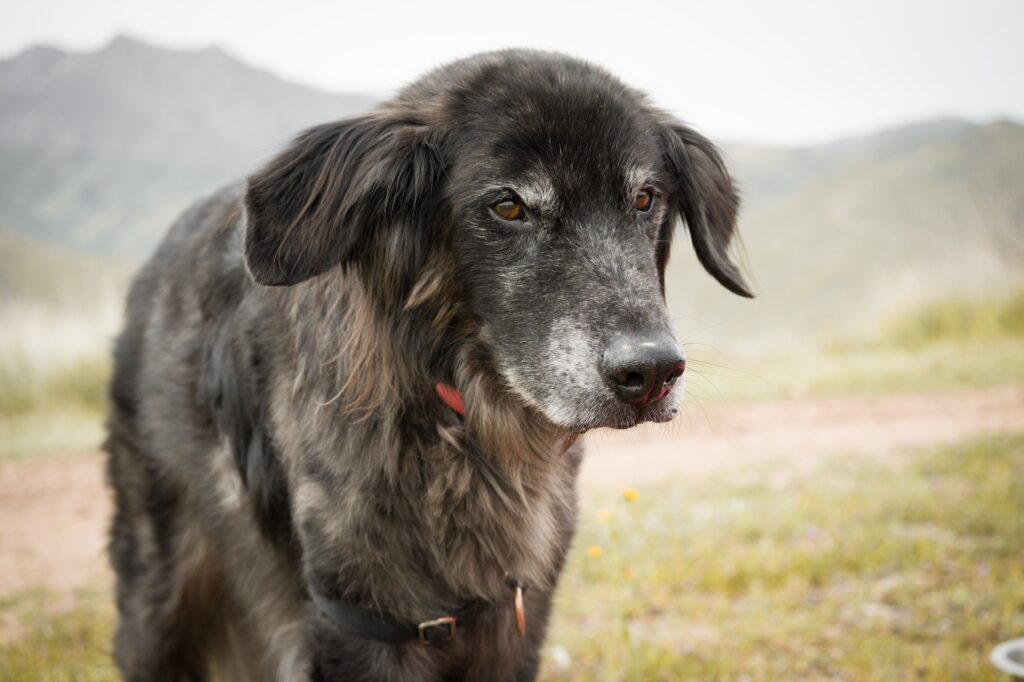
How to help your dog age comfortably
Who says older dogs can’t still have fun? We all want our dogs’ advanced years to be as joyful as possible, and there’s plenty we can do to make that happen—both preventatively when they’re young and proactively as they age.
Watch the scale
If you’re concerned about your dog’s mobility and overall health, Dr. Houpt said maintaining a healthy weight is “probably the best thing you can do to help your dog age gracefully.” No matter what your dog’s age, it’s never too early to make sure their diet and exercise are setting them up for long-term health. Your dog’s body condition score is crucial as well, and you can keep track of it at home in between vet visits. Pre-portioned meal plans can help make it easier to manage your dog’s weight.
Feed them a nutritious diet
We know that what your dog eats can make a huge difference when it comes to healthy aging. Fresh food can support healthier aging, and feeding a food that’s complete and balanced for adult maintenance is crucial. Dr. Block recommends working with your vet to choose a diet that supports your dog’s health, like one made with whole, unprocessed foods.
Consider supplements
“Even the subtle decisions that we make for our dogs when they’re young can have material impacts on their long-term health when they’re older,” Dr. Block said. That’s why he recommends certain supplements like high-quality omega-3 fatty acids and probiotics, as well as joint supplements for dogs prone to injury or degenerative disease.
Know your vet
Preventative care makes a world of difference, and so does having a close relationship with a vet who really knows your dog. “I think regular visits twice a year, and sometimes more frequent for super senior dogs, can really help set people up for success,” Dr. Block said. The more you check in with your pet’s health, the earlier you’ll spot the signs of aging—including those that might require medical attention.
Love your pet
Really, all of the advice you’ve just read boils down to one thing: whatever your dog’s aging process might bring, the key is to remember how much you love them and keep paying attention. “I think it’s important that people try to make the dog’s golden days as golden as possible,” Dr. Houpt said. The best thing you can do: “Spend time with them.” Just like us, our dogs deserve to make the most out of their final years; a happy retirement is one of the greatest gifts we can give them.
The post 10 Signs Your Dog Is Aging—and How to Keep a Senior Dog Healthy appeared first on The Farmer’s Dog - Digest.
Comments
Post a Comment