In this article:
- Fresh food has a range of fat levels
- Dogs need healthy fats in proper proportions
- Complete and balanced foods are healthiest for dogs
Fat, and its role in canine nutrition, are often misunderstood. Considering that obesity is a major health issue for dogs, and that dietary indiscretions (dogs eating things they shouldn’t, like fatty human foods) can be dangerous, you might think it follows that dogs ought to avoid fat altogether.
But the truth is much more complex. In fact, fat is essential to dogs’ good health. The secret is to feed them the correct amount of good fat as part of a complete and balanced diet—and ready-to-eat foods from The Farmer’s Dog are formulated by on-staff, board-certified nutritionists to meet 100% of dogs’ nutritional needs.
Here are details on how to help make sure dogs are getting the healthy fat they need to thrive, and staying away from dangerous foods.
Myth: Fresh food is high in fat
Fact: Fresh food has a range of fat levels similar to those found in other veterinarian-recommended diets
All fat levels in The Farmer’s Dog diets are widely recognized as safe, and well within the guidelines established by the Association of American Feed Control Officials (AAFCO) and the National Research Council (NRC).
While it is true that—like canned and wet foods—fresh foods can have higher fat levels than kibble, not all fresh formulas do. Even the highest-fat recipes from The Farmer’s Dog remain in line with other products and brands historically recommended by veterinarians, and our lowest-fat diets meet the levels found in therapeutic low-fat diets veterinarians are accustomed to.
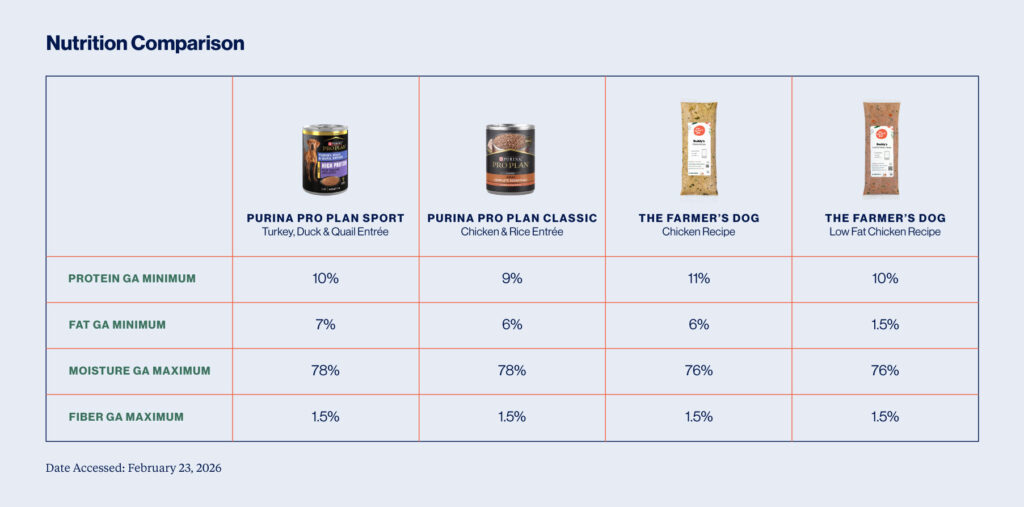
Higher fat levels are common and required to support the growth of puppies and the energy demands of canine athletes. However, these levels are not exclusive to “performance” or “sport” diets. They are also found in everyday maintenance formulas backed by veterinarians and well-tolerated by healthy adult dogs.
Kibble’s comparatively low fat levels are largely due to manufacturing constraints rather than health considerations. Historically, kibble processing has limited how much fat could be included due to manufacturing and cost limitations. This context is important when comparing fat levels across different forms of dog food.
Myth: All fat is bad for dogs.
Fact: Dogs need healthy fats in the proper proportions.
Your dog requires healthy fats as part of a balanced diet. When it’s part of a food formulated by on-staff, board-certified nutritionists to meet AAFCO standards, as is the case with The Farmer’s Dog, fat can have numerous benefits.
Omega-3 fatty acids are healthy fats that have anti-inflammatory properties and can help support the quality and condition of your dog’s coat and skin—as well as heart, brain, and joint health.
A diet containing appropriate levels of omega-3 fats is the best option to ensure you’re feeding the right amount and proportion of fats. Complete and balanced recipes from The Farmer’s Dog include omega-3 fatty acids in the right proportions to support dogs’ health.
Other types of pet food, especially canned diets, can contain higher fat levels than kibble. These elevated fat levels enhance palatability, texture, and digestibility. They support healthy skin and a shiny coat, increase endurance, and provide a dense and efficient source of energy. But fat also increases production costs, as it is a more expensive energy source than carbohydrates.
A high-quality, complete and balanced diet should include healthy fats, along with protein and other nutrients, in the right amounts and proportions. Ideally, your dog’s diet will provide fats through fresh, lightly cooked food.
There’s a misconception that higher-fat food makes dogs fat, but that’s not true. Dogs become overweight or obese when they consume too many calories compared to what they’re burning—and at The Farmer’s Dog we portion dogs’ food according to their individual needs, making it easier to keep them in ideal body condition.
For dogs who require a low-fat diet, our Low Fat Chicken recipe, available only via a veterinarian’s recommendation, may be a suitable choice. We also offer the option to prepare complete and balanced home-cooked meals using our Do-It-Yourself Nutrient Mix.
It’s important to note that, while complete and balanced foods with higher fat levels are healthy for dogs and approved by vets, the same is not true of fatty table scraps—which can put your dog at risk of serious illness.
Myth: High fat is dangerous.
Fact: Complete and balanced foods with higher fat levels have been researched, and are safe.
While there is research showing that particular high-fat diets can cause health issues in dogs, the diets studied in those cases were not complete and balanced, and their levels of fat were much higher than those in even the highest fat recipe from The Farmer’s Dog. As we noted above, all recipes from The Farmer’s Dog are well within NRC and AAFCO guidelines for fat levels.
Dogs with certain conditions may have fat intolerance, and those dogs should eat a therapeutic or medical low-fat diet. Always follow your veterinarian’s advice; they know your pet’s history and individual needs.
But a complete and balanced fresh food with the right proportions of healthy fats will give most dogs the nutrition they need to thrive from puppyhood through their senior years.
The post Myths and Facts About Fat in Fresh Dog Food appeared first on The Farmer’s Dog - Digest.
Comments
Post a Comment