In this article:
- What makes rescue dogs different?
- What do we know about shelter dog stress?
- What is decompression, exactly?
- What do I need in my home before my shelter dog arrives?
- How do I set up a routine for my dog?
- Why is it smart to go slow with a rescued dog?
- How do I know my decompression techniques are working?
Bringing home a rescue dog is one of the most rewarding things you can do, but it can take a little extra time and love in the beginning to set them up for success in their new life. Between the shelter environment, an unknown history, and the upheaval of yet another move, a rescue can understandably bring a little baggage with them.
The good news? With the right approach during those critical first weeks, you can help your new best friend settle in, and soon they’ll show you their true personality.
What makes rescue dogs different?
The challenge with rescues comes down to a few factors: age, learning history, genetics—and, perhaps most impactfully, the major stressor of the shelter experience itself.
“Most trainers and behavior consultants believe that most shelter dogs have experienced some level of trauma,” explained Maddie Messina, a certified dog trainer at Paws for Thought Training. This is “not necessarily from direct human aggression,” she said, “but could even be related to living in a loud, stressful environment.”

Think about it from your dog’s perspective. They don’t know where they are when they’re in the shelter. They’re surrounded by unfamiliar dogs, overwhelming smells, and sounds humans may not even be able to perceive. Then they’re moved again to your home—another strange place with new people, new rules, and zero context for what’s happening.
The science of shelter dog stress
Here’s something crucial that many new adopters don’t realize: even after your dog arrives in your calm, loving home, their body is still processing shelter stress. Research has shown that it can take up to ten days for stress hormones to come down after a dog leaves a shelter or rescue environment. A 2022 study published in Scientific Reports found that shelter dogs’ levels of cortisol—the body’s main stress hormone—increased by about one-third after six weeks in a shelter environment.
But hormones are just part of the story. “It could be up to three months before you get a full picture of their true personality,” Amy Asaro, Guest Experience Manager at the San Diego Humane Society, said. She recalls her own adopted Yorkie, who didn’t bark once for nearly three months. “I thought, did I get the world’s only Yorkie that doesn’t bark?” Then one day, the mailman arrived, and suddenly her quiet dog found his voice.
Research backs up Asaro’s experience. A 2023 study in PLOS One that tracked 99 adopted dogs found significant behavioral changes that continued to shift through the first six months after adoption. Another study that same year found that physiological measures of stress, like appetite and sleep, can change for up to six months following adoption.
What is decompression, exactly?
You’ve probably heard trainers, rescues, and shelters use the term “decompression,” but what does it actually mean? “Decompression is quiet time,” Asaro said. “Lower lighting. Solitude. No forced interactions with people, other dogs, or other animals.”
Wendy Dunn, who has been volunteering at Twenty Paws Rescue in New Jersey for over a decade and has fostered upwards of 50 dogs, puts it like this: “Decompression is the adjustment period that allows a dog to come down from stress and learn that their new home is safe.”
Messina described decompression activities as the equivalent of “yoga for humans”—they allow the dog to destress naturally. “Most of the time we want to avoid introducing [dogs to] too many new things or people—and give them opportunities to de-stress through nature exploration and activities that satisfy a natural urge, like licking and chewing.”
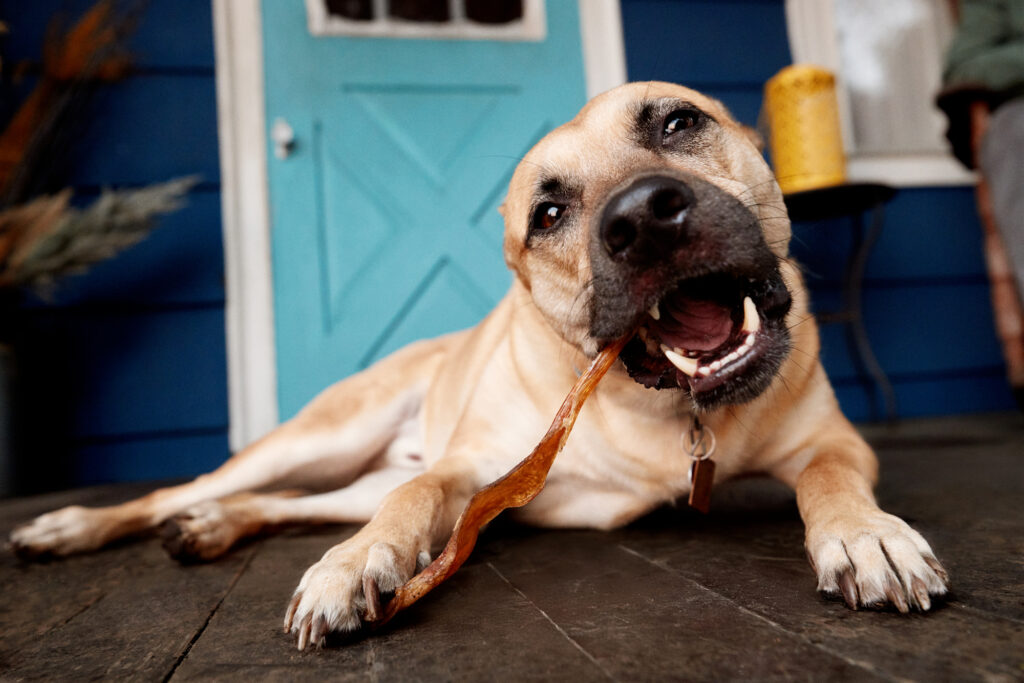
Here’s the opposite of decompression: taking your new dog to meet all your friends, going to the dog park, hitting the beach, or hosting a celebration. These well-meaning activities can be overwhelming when a dog doesn’t know you yet.
“Handling and touch can be so overwhelming for them,” she adds, even noting that bathing should wait a couple weeks. (This can be hard for a lot of people, she noted. Some dogs are due for a glow-up after struggling before the shelter and in the shelter.)
One general concept that trainers will often refer to is the “3-3-3 rule” for rescue dogs—three days to decompress, three weeks to learn your routine, three months to feel at home. But Messina cautions that this timeline isn’t hard and fast—which some of the research mentioned above supports.
Dunn, who has fostered upwards of 50 dogs, added that “You’ll often hear it takes three months for a dog to decompress, but I feel it depends on the dog and how long they’ve been in a shelter or unstable environment.”
In short, every dog will need to decompress with a routine (more on that below), but every dog’s timeline could look different. Work with the dog you have.
Setting up your home for success when bringing a shelter dog home
Before your new dog arrives, think of preparing your space the way you’d babyproof for a toddler. You don’t know what you’re getting until you get it—every dog is an individual—so having the right supplies ready can smooth over those first days.
Essential supplies:
- Baby gates or a playpen to create safe, confined spaces
- A crate to use as a safe retreat (never, ever as punishment)
- High-value treats to help build positive associations with yourself and your home
- Enrichment toys like Kongs, lick pads, and puzzle toys for redirection and stress relief
- An enzymatic cleaner, because accidents will likely happen
- Various leash and harness options, since you don’t know your dog’s walk style yet
- Comfortable places to sleep in quiet areas
Checking off the items on this list will put you in a good position to succeed, but know that the dog will still need time to adapt—no matter how many high-value treats you offer.
“If you take a dog home and that dog’s tail is tucked, he’s curled up, he’s hiding somewhere, that’s a dog who’s scared,” Asaro said. “That dog needs time.” This is where having a covered crate as an open safe space becomes invaluable. Asaro uses one for her Yorkie, who runs there whenever something scares him—particularly smoke from cooking, which she discovered triggers an intense fear response. “Anything that scares him, he goes and runs in there, and I’ve taught my children, if he’s in there, you don’t touch him. You wait for him to come out.”
Routine, routine, routine
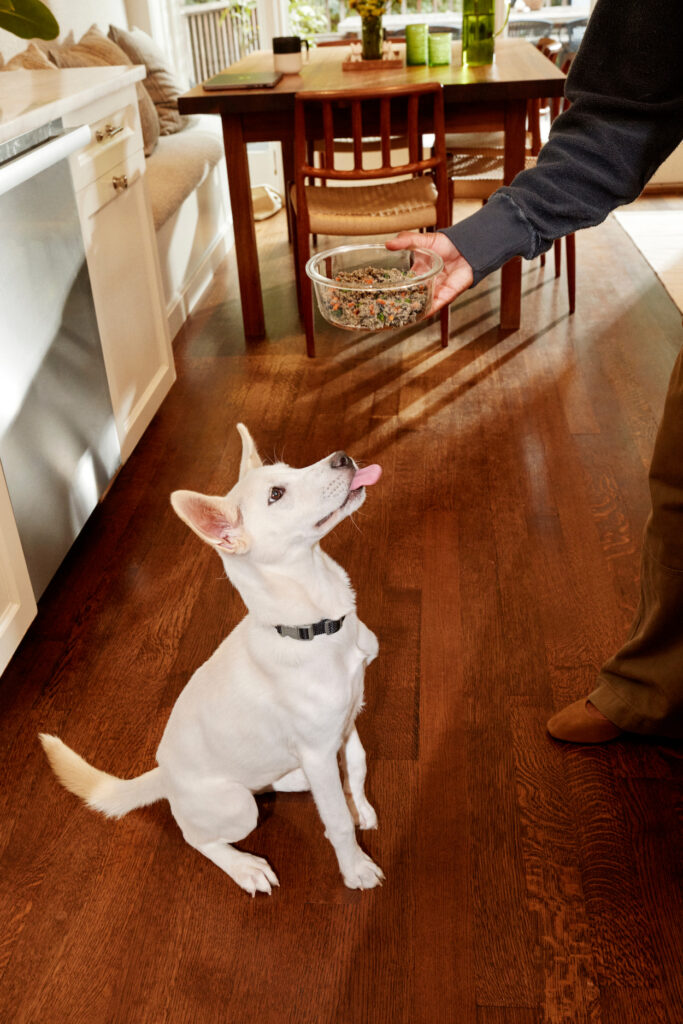
When you bring your new dog home, establish a routine immediately. Dogs who don’t know what to expect, or when, will feel anxious. When they can count on regular potty breaks, meals, and walks at the same times every day, they can begin to feel stable.
“Potty breaks first thing in the morning, last thing before bed, regular walks at the same time, feeding at the same time,” Asaro said. “[New owners] don’t know what they had in their previous home, so building that trust with them is just so important.”
Don’t be discouraged by initial accidents, and don’t punish the dog for them now or ever (it’s not effective, and it will stress them out more). “A dog has to learn your routine as well,” she added. “Initially, it’s OK if you have accidents.” The consistency of your routine will help them understand what’s expected, and they’ll get better at it.
Go slowly
One of the biggest mistakes new adopters make is trying to do too much, too soon. This applies to everything from social interactions to time alone.
How to introduce the new dog to other pets and animals
This one takes a long runway.
“If possible, bring your [existing] pet to the shelter to meet your new addition to see if they will be a good fit before deciding on adoption,” Messina advises.
If you have other dogs or cats, resist the urge to let everyone meet on day one at home. Have separate spaces ready.
“Animals should be fed separately until you are really confident there will be no food aggression. Have gates and pens ready to use to separate them during play and rest as needed.”
And, perhaps obviously, “skip dog parks,” Dunn said.
How to manage their time left alone
Adopters may leave their seemingly perfect dog alone for the first time and come home to destruction. “Don’t try to immediately leave them at home alone,” Asaro added, warning of separation anxiety. “Work up to leaving them in short increments initially.”
Use the gradual approach here too. Start with just five minutes. If that goes well, try ten minutes, then twenty, and so on. This gradual approach builds trust—your dog learns that you always come back.
Read your dog’s signals
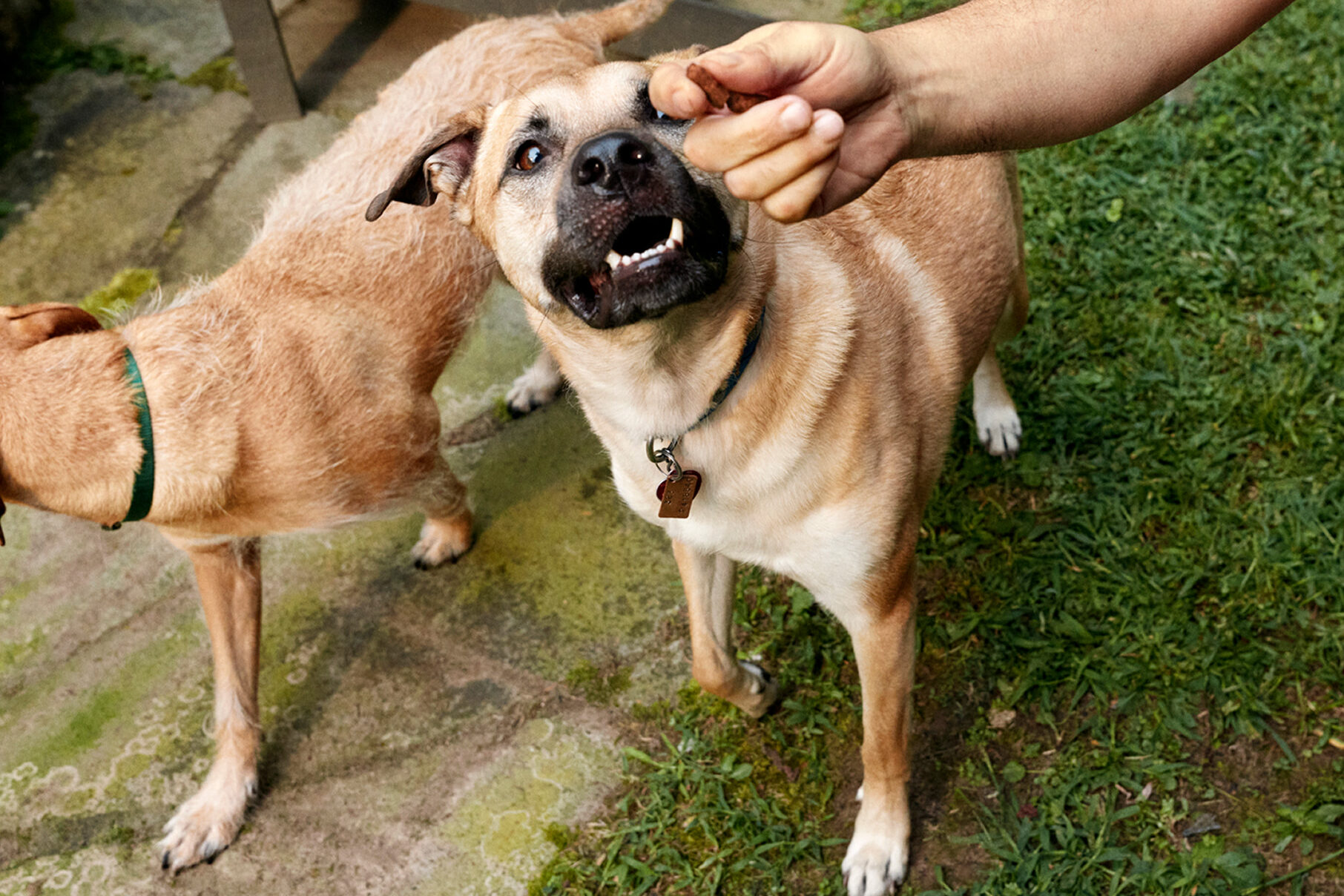
How do you know if decompression is working? Watch your dog’s behavior closely. “If a dog is not taking treats, it’s stressed,” Asaro said, adding it doesn’t matter even if their body language appears happy. Not taking treats is a sure sign that something is up.
Besides taking treats, a dog who decompresses successfully should be eating consistently, be able to curl up and relax, and go to sleep. “A sleeping dog is a happy dog,” Asaro said.
Dunn added that “you see their personality start to emerge and grow.” Look out for “[s]mall but powerful moments [like] playing with a toy or asking for belly rubs.”
Don’t forget the microchip
Here’s a critical, but often overlooked, step: make sure your new dog’s microchip is registered in your name immediately. “Dogs are more likely to escape within the first two weeks,” Asaro said. “Those stress hormones are still there, and when you take an animal home, they don’t know you.” Eventually, your dog will love you—but, in those early days, you’re a stranger and they’re in a strange place.
If you have a yard, don’t assume it’s secure. You don’t know yet if you have a jumper, a digger, or an escape artist.
“If they got out and they came into the shelter as a stray, it’s possible that they got out from their previous home,” Asaro said.
Seek help if needed
Most of the time, with patience and consistency, your dog will settle in. But sometimes you’ll discover challenges that call for professional support. The good news is that many shelters and rescues offer extensive post-adoption resources, including behavior consultations, training classes, and online videos.
Bringing home a rescue dog requires a willingness to let them show you who they really are—on their own timeline. Yes, there will be surprises—some good, some hard. But with the right approach during those critical first weeks and months, you’re not just helping a dog decompress. You’re building a foundation of trust.
“You want to show them through your actions that they can trust you,” Asaro said. “That lasts throughout your entire time of having them.”
The post Here Are the Best Ways to Help Your New Shelter Dog Feel at Home appeared first on The Farmer’s Dog - Digest.
Comments
Post a Comment